Showing posts with label Geneva Motor Show. Show all posts

Sunday, May 8, 2011

beatiful Ladies at the 2011 Geneva Motor Show

The Geneva Motor Show is one of the biggest car shows in Europe with all the car manufacturers attending in order to show off and promote any new launch that is going to happen in the next year. Ford announced at the event that the Ford Kuga and Ford Mondeo will both have new engines later this year to improve performance. Ford introduced the Kuga late compared to other car manufacturers such as Land Rover, Toyota and Nissan. But even though the Kuga was late to the party it doesn't lack any of the features and charm of its rivals. In fact when Ford was designing the Kuga they probably researched the other models on the market to see what were the advantages and disadvantages of the 4x4 vehicles on the market. Ford has certainly got the style right with the Ford Kuga. In fact the stylish chassis is probably its best feature if you consider the price Ford is currently selling the 4x4 at. Its looks definitely play a part in why people love this car so much.

The technological features aren't as good as other models from other manufacturers but you probably wouldn't expect it to be considering a brand new Ford Kuga is priced at just £17,500. This is one of the cheaper 4x4s on the market which is stylish too. The Kuga is not only stylish but it is also very comfortable inside. The space might be a problem though with it feeling quite compact inside. Space is usually a problem with most 4x4 vehicles on the market, because of its robust build the interior is smaller than some estate cars for example.

http://1.bp.blogspot.com/-_M7h_UxSsjU/TXAuS1DTREI/AAAAAAAEGQ0/qrf5ysgbiik/s1600/2011%2BGeneva%2BMotor%2BShow%2BLadies-35.jpg
http://4.bp.blogspot.com/-T0R7umELnZU/TXAuSgCXHPI/AAAAAAAEGQs/gKvvW1k6KI8/s1600/2011%2BGeneva%2BMotor%2BShow%2BLadies-34.jpg
There are many exotic super cars which are really so gorgeous so as to take the spotlight all through their debuts at the auto show. Apart from all these facts prototypes high quality equipped with the new equipment, technical breakthroughs, international partnerships, as well as political and social debates, were the chief points which were placed on the topmost position in the priority list for announcement at the exhibition. The show has been regarded, for the world's automakers, as a level playing field.


http://4.bp.blogspot.com/-5Y0g2pC3QAo/TXAuSAHdy3I/AAAAAAAEGQU/raStTurBoB8/s1600/2011%2BGeneva%2BMotor%2BShow%2BLadies-31.jpg
http://4.bp.blogspot.com/-ZgdOy-I8L00/TXAuRoWTNBI/AAAAAAAEGQM/d5KGyHM81h8/s1600/2011%2BGeneva%2BMotor%2BShow%2BLadies-30.jpg

Tuesday, March 20, 2007

Magna Steyr MILA Future Concept

MILA Future - an automotive sculpture with four roof configurations


At the 2007 Geneva Motor Show, MAGNA STEYR is presenting MILA Future, an automotive sculpture that is reduced to a forward-looking design and fully functional roof system. This unique system can be used to show four different roof configurations on one vehicle - a world first.

If a roadster has a retractable hard top (RHT), its back does not usually lend itself to classic coupé lines. When the roof is closed, the trunk volume is generally satisfactory, but when open the storage space may be reduced by up to half. Many of the retractable tops common today require a rear deck cover that opens in the opposite direction to travel to accommodate the roof - making additional motors necessary. MILA Future offers a variety of innovative ideas and demonstrates the development team's creative potential at MAGNA STEYR and MAGNA Car Top Systems in a number of interesting details.

MILA Future: the world is adaptable, but always open - four variants in one vehicle

MILA Future coupé:
A characteristic of classic coupés is the flowing silhouette towards the rear. It gives the vehicle an elegant, dynamic appearance that the target group on the market regards as its distinctive feature. In addition to attractive styling, other benefits include fully utilizable trunk volume and protection against wind and weather for the passengers.


MILA Future landaulet:
Landaulets were horse-drawn carriages that had double soft folding tops for driving half open. Thanks to the special design of roof, deck lid and rear window, the Mila Future can be driven in a similarly romantic mode - the rear window is lowered completely, but the roof itself remains in place over the passengers protecting them against direct sunlight. On country roads you therefore feel in touch with your surroundings and if driving faster the airflow is reduced to a pleasant level.

MILA Future roadster:
When the roof is down and the rear window lowered, you can experience real roadster feeling. Compared with conventional solutions, however, the remaining trunk space is 20% larger. This additional volume is created by leaving the B and C pillars on the deck lid as styling elements, which means that the space is not required in the trunk area. The result is a new, exciting appearance and makes this type of vehicle unmistakable on the roads. At the same time, it provides adequate rollover protection - so the typical bars behind the seats are not required.


MILA Future copster:
A combination of coupé and roadster, this variant keeps the roof in the trunk with the rear window in the coupé position. It also serves as a permanent wind deflector and does not require manual mounting. This configuration gives you a sense of safety in the interior without having to sacrifice the open-air feeling.

Sunday, March 11, 2007

Geneva Motor Show: Giugiaro VAD.HO

PRESS RELEASE:
VAD.HO. BMW hydrogen power


Once again, Geneva offers the opportunity to develop research on form and contents that break away from the industrial approach that Italdesign Giugiaro adopt daily in order to supply their worldwide clients with designs that best suit their markets.

The challenging "diversion" this year represents a niche theme meant to be heatedly discussed: a super-sporty extreme two-seater fuelled by hydrogen to meet the increasingly pressing need to promote and develop alternative and environment friendly propulsion systems and to explore the potential challenge offered to design by a more flexible "displacement" of the chassis lay-out in new engine, mechanical, and electronic equipments.

The decision to remove the steering wheel took Italdesign Giugiaro to the creation of a highly innovative driving system: two joysticks are fixed on the armrests of the pilot's seating and pedals unit, where all elements can be adjusted and customized to the driver's needs. The armrest/joystick/ electrical pedals and seating unit is not connected to the chassis. This and its by-wire impulses system allow to adapt the different versions with right, centre and left driving with no onerous works once the vehicle should go into production. This system presents design - construction and performance - characteristics that prompted Italdesign Giugiaro to patent it.

VAD.HO is meant to be an open "work in progress": it has been positively welcome by BMW that accepted to provide for it their series 7 12 cylinders hydrogen powered engine.
One curiosity: the acronym "VAD.HO" is a play on words that uses the name of the Vadò industrial area in Moncalieri where Italdesign Giugiaro headquarters have been located since 1974, and also refers to the hydrogen propulsion system adopted for the vehicle (vado - or "I go" in Italian - on H).


The ****pit

This model immediately puts all its ambitions on the line: a longitudinal ****pit in polycarbonate emerges on the left-hand side while the right side houses the engine and hydrogen propulsion devices in the centre. The two Argonauts are seated in tandem in the fuselage, settled into a comfortable and super-equipped ergonomic ****pit. The joysticks are fixed in the armrests that are integral with the pilot seat (the left armrest can be raised to facilitate getting in and out of the vehicle).

Designers and technicians believe that this solution facilitates naturally comfortable – and therefore stable and precise – steering manoeuvres and activation of all the joystick commands, including driving and secondary devices such as entertainment and other options.
In order to facilitate manoeuvres in curves without having to twist or rotate your wrists, the joysticks were conceived with two grips that help the necessary movements. The joystick moves back and forth along the armrest to ensure driver comfort, as well as the sliding pedal block that, hinged on the lower part, adjusts to the seat, which is in turn fixed to the chassis.

The control group is designed as an IT console with liquid crystal displays designed for aeronautic applications (EFIS - Electronic Flight Information Systems). The digital driving instrumentation is positioned centrally under the rear-view continual video monitors and the navigator; side video cameras project films externally. The surface occupied by the instrumentation is in any case limited, in order to allow the pilot maximum external visibility.
Access to IT data from the console is also available to the rear passenger by means of a dedicated joystick, similar to the driver's, and two monitors built into the back of the driver's seat. The faces of both pilot and passenger are filmed by video cameras and may appear on reciprocal monitors to enhance team interaction.

Thanks to video cameras installed in the frontal optical group, the driver can use the monitors either for parking radar and for an infrared effect for night-time driving, or interactive driving between the car and road infrastructures, when they become available.

Passengers get into the vehicle through two integrated doors/domes that are hinged lengthwise onto the structure and lift gull-wing style. The living space for the pilot and passenger are definitely comfortable because they were calculated at an "OSCAR percentile" larger than 95% and therefore more spacious than those of a luxury sedan. The rear passenger is able to stretch out his legs and change his position by adjusting the footrest platforms on the sides of the front seat. The armchairs are also equipped with four-point belts that can be regulated all around.
Passenger safety in case of collision or overturning is guaranteed by structural side reinforcements, the steel roll bar on which the two semi-domes rest, and the activation of the air bags in the oval strip under the structure at the ****pit base. The cell is equipped with "umbrella" airbags that surround both the pilot and the passenger.

The upholstery materials chosen for the interior are in metallic and phosphorescent opaque grey tones: both for the silver leather armchairs and the synthetic pieces in aeronautic styling. Bolder effects were used in areas around the control console.


The package

The sporty-racy ambitions of this project have imposed a wedge-shaped volume, backed up by very subtle lines and modulations that are never forced or exasperating, but rather in perfect harmony with those parameters of balance and elegance that distinguish the Giugiaro trademark.

The introduction of stylistic features was intentionally avoided on this project, which is undoubtedly oriented towards contents. In fact, the VAD.HO body is characterised by a feasible decomposition with regards to production logics and meets international homologation regulations (including pedestrian accidents).

Even the overall dimensions are "reasonable". The figures are close to those of the Ferrari Maranello, a compact two-seater with similar performances: 4550 mm long, 1980 mm wide, and 1150 mm high, like Enzo model.

Naturally, the aerodynamic penetration requirements are enhanced by the reduction in the main section because the windscreen/****pit impacts on only half of the vehicle. The nose presents a screwed-on bumper block with ample air intakes. The lower zone of the bonnet features an adjustable spoiler in between the "pagoda"-shaped ridges formed by the fenders that smooth off into the sides. The optical devices are housed in a drop-shaped recess that begins with the bumpers and narrows towards the sides: this cavity houses the dual-function projector, the position and direction LEDs, a video camera at the top, and the passenger compartment air intake.

The asymmetric transparent dome gives this car a strong personality; the windscreen wiper is hidden under the small crowl. From the side, the profile of the fender crest is sinuous and dips towards the centre, while a bird's eye view confirms the designer's will to make the front more aggressive and modulated and the tail softer and sharper.

The originality of the ****pit's asymmetric solution is even more visible in VAD.HO central body. The fairing of the engine air system, the filter, and the electronics can be seen on lowered section that houses the engine. Since the cut of the passenger door is repeated symmetrically on the engine side, the engine block can be simply accessed by raising the large panel/trapezoidal door hinged onto the centre line with a gull-wing movement. The recess of the side indicator also serves as housing for the video camera.


The blunt one-piece rear end recalls the Corvette, but is characterised by the line of the bonnet with its asymmetric profile because it must converge with the dipping line of the ****pit and the side/engine line. The trunk capacity for a super-sporty two-seater is truly remarkable: 550 dm3. The rear end view is "carved" to emphasize all the aggressiveness of this vehicle's nature. The "G" Giugiaro logo was adopted to house the rear stop LEDs with striking media impact.


VAD.HO is following up the content research started by Italdesign Giugiaro with 2004 Toyota Alessandro Volta with hybrid propulsion and the 2005 Mitsubishi Nessie that runs on hydrogen; while the formal aspects evoke the design of the 1988 Aztec, which even then offered driver and passenger a chance to slide into a definitely attractive "aeronautic" atmosphere with a formula that today is much more easily feasible thanks to IT innovations and by wire technologies that have been tested and nowadays are considered to be reliable. This evocation of the world of aeronautics is shown again in the colours choice for the body - opaque silver-grey -, in the service decals on the engine equipment and the fuel tank, and the use of large 20" solid tyres.

Geneva Motor Show: Škoda S2000 concept

It has long since been a tradition, that Škoda Auto presents studies at the major automobile exhibitions affording a look into the future of the automobile.

As a result of a decision taken by the Board of Management in December 2006, the more than one hundred year old motor sport tradition in Mladá Boleslav will be continued.

The Škoda Study S2000 is the implementation of this idea in reality. The Škoda S2000 is a concept car on the basis of the new Fabia and is intended for the future involvement of the Škoda brand in rally sport. The Study S2000 has been designed to comply with the new FIA Rally Regulations.

This category is on the best way to becoming the most attractive form of rally in the future. However, the Škoda Super 2000 is not only intended to be powerful but also affordable, thus making it the ideal offer for private teams and young talents wishing to enter the sport at national and international levels.

In accordance with the regulations, the car will have a two-litre, four-cylinder petrol engine. The Škoda Study S2000 exhibits fundamental benchmark data – 3,992 millimetres in length with a wheelbase of 2,486 millimetres correspond to the values of the new Fabia.

A clear difference to the serial model, however, is the four-wheel drive. The roll cage in the interior and further parts of the car comply with the Super 2000 regulations.

Škoda Auto celebrated a major jubilee in the year 2001 in its 100-year history of motor sport. With the new Study 2000 designed on the basis of the new Fabia, the tradition of rally sport will be continued.

Friday, March 9, 2007

Geneva Motor Show: Stola Phalcon Coupe


Notable only for its barely digestible yellow paint, massive overhangs and bird of prey hood ornament, the Stola concept coupe is the work of a company also called Stola based in Turin, Italy. The enormous coupe owes much to its creator's relationship with Brabus, which supplied its 6.3-liter biturbo V12. The company claims 750 hp, 1,003 lb-ft of torque and a top speed in excess of 200 mph. Twenty-two inch wheels and 315/25 Pirelli PZeros are fitted at the corners, but Stola offered no chassis details. Suffice to say that handling would probably not be among this coupe's strengths. --Erin Riches, Senior Content Editor.


source: blogs.edmund.com

Thursday, March 8, 2007

Geneva Motor Show: Hyundai QarmaQ Concept

PRESS RELEASE:

Advanced Technology Inside and Out: Hyundai ATDV Features Innovative Applications Utilizing GE Materials


At the Geneva Motor Show here, GE Plastics' high-performance composites and thermoplastics is taking the spotlight with close to 30 diverse applications for Hyundai's advanced technology development vehicle (ATDV), the QarmaQ. The crossover utility vehicle (CUV) is a joint project of GE Plastics and Hyundai to demonstrate the design freedom and practicality of using plastics in components traditionally manufactured from metal, glass, and thermosets. It features GE's advanced technologies in five key areas: the Elastic Front*, exterior, interior, lighting systems, and underhood.

Among the benefits of the GE Plastics materials are a weight reduction of up to 60 kg that can offer an average fuel savings of up to 80 litres/year; improved pedestrian safety; and the ability to create complex, 3D shapes.

Environmental Benefits

The QarmaQ showcases the significant environmental advantages of using plastics. For example, Xenoy iQ* and Valox iQ* resins composites – both GE ecomagination* products – are derived from 85 percent post-consumer plastic waste. The materials are used on key parts of the vehicle and helped divert close to 900 polyethylene terephthalate (PET) plastic bottles from potential landfill. Paint-free solutions used for the vehicle's interior help to reduce volatile emissions given off during traditional painting operations. GE's Flexible Noryl* resin enables thinner wire and cable coatings that help reduce vehicle weight and allow more electronics in the same space.


GE Plastics materials are also used in the following applications:

Elastic Front
A unique pedestrian safety development that requires no airbags or mechanical pop-up hydraulics; it uses the inherent properties of GE's materials.

Energy-absorbing structures and the natural properties of GE's plastics are seamlessly integrated into the futuristic styling of QarmaQ. Different impact zones on the car correlate to the various areas of a pedestrian's body likely to be contacted in a collision.

- Lower leg protection
• Global Energy Absorber: Using Xenoy iQ resin, GE Plastics has developed a single design for energy-absorbing countermeasures that meet FMVSS/CMVSS, and European and Japanese Pedestrian Phase I and II requirements. The part combines two functions: it is soft and supple enough to absorb the energy when the lower leg of a pedestrian is contacted, but stiff enough in a situation where the driver may drive into a barrier or object at low speed.

- Upper leg protection
• Bumper: Due to the higher hood of a CUV, absorbing energy in the area around the junction of the top of the grill/bumper and front of the hood is critical, as it potentially will impact the hip area of a pedestrian. The physical properties (modulus and ductility) of the new Xenoy iQ* HMD resins make it possible without extra complicated structures or mechanical solutions.

• Hood: Using developmental composite HPPC material technology – GE's Xenoy iQ resins - the lightweight hood provides energy absorption via design and material properties. The HPPC thermoplastic sandwich composite material offers a solution close to half the weight of traditional materials, which can help reduce injuries in a crash.

- Head impact zone
• Front fenders: Large injection-molded, vertical wraparound fenders using GE's Xenoy iQ HMD resins make their debut on the QarmaQ in Geneva. Because the top area of the fenders also form part of the horizontal hood surface at the front of the car, they must be capable of absorbing impact resulting from a collision with a pedestrian's head. Equally important, HMD technology enables large automotive molding to be implemented while meeting tough OEM requirements for dimensional tolerance on gaps and flushness. Due to its unique nanotechnology fibrillation, HMD Xenoy resins can also help improve dimensional stiffness of the large body panel components.


• Hood: The horizontal surface of the HPPC hood made with Xenoy iQ resins contribute important energy management aspects to this critical zone for head impact. In addition to its crash management properties, HPPC is unique because it offers a tough, durable, but flexible and lightweight alternative to traditional metals.

Exterior

Larger areas and wraparound designs take Lexan* high-tech transparent plastic resin glazing to a new level with noteworthy weight savings of up to 29 kgs on the QarmaQ.

• Movable side glazing: Giving customers an all-around open-air experience, Lexan side glazing uses the Exatec* 900 system that provides an abrasion-resistant and weatherable PECVD (plasma-enhanced chemical vapour deposition) glass-like layer on the surface of the molded Lexan* glazing. Using two-component molding, the inherent ability of Lexan to integrate seals and mechanical functions within the glazing component eliminates traditional unsightly seals and mechanical fastenings to produce a seamless flush window.

• Integrated panoramic sunroof /fractal antenna: The Lexan polycarbonate (PC) panoramic sunroof with UV-blocking technology is designed to be a complete module, providing everything from lighting to telemetry. Manufactured with a Fractal Antenna® Design from Exatec and FICOSA, together with GE's Lexan glazing, the system can be used as a telematic platform for multi-band antenna integration. Additional opportunities include using Exatec 900el electroluminescent interior light band for an improved interior ambiance.

• Doors: Delivering up to 50 percent weight reduction compared to metals, doors made with GE's HMD Xenoy iQ resins are dramatically sculpted to accommodate all passenger sizes while maintaining design, strength, and practicality.

• Integrated lift gate: Designed as a working sub-assembly, the rear lighting, wiring, sensors, and all the necessary electronics are integrated into the lift gate. The dramatically shaped glazing demonstrated on the system is made from Lexan PC featuring the same Exatec900* coating technology demonstrated on the side windows. This lightweight component can meet the regulatory requirements for driver visibility as well as enable the use of a wiper and defroster technology from Exatec.

• Precision trunk glazing: GE's Lexan glazing offers signature surfaces and back vision for the driver without compromising performance and safety.


• Mirrors: Clear visibility in the mirrors (de-misting and defrosting) is monitored and controlled with the use of GE's sensing technology and a new thermoelectrically conductive plastic resin from GE Plastics called Statkon* resin.

Interior

• Displays and instrumentation: GE's Illuminex* optical display film uses a "coating-free" diffuser technology to meet demanding optical requirements in the liquid crystal display (LCD) back lighting industry.

• Doors: Fabric-covered upper door trim parts are back-molded with Cycoloy* CY8540 resin, which allows the fabric to be processed without being stretched and damaged.

• Instrument cluster, dashboard, and door trim: Beautiful 'Alpine white' Lexan Visualfx* special effects resin with a layer of crystal-clear Lexan resin molded over the top provides depth and super-high gloss.

• Integrated airbag door: Lexan EXL resin enabled an innovative design that seamlessly integrates the airbag door into the fabric-covered instrument panel for outstanding aesthetics and improved safety via fragment-free airbag deployment, even at -40 C.

• Pillar trims: Lexan EXL 1414H resin fulfills even cold impact demands, and is an excellent candidate for designs with airbags behind the pillar trim.

• Seat backs/center console: Designed in deep gloss 'Ceramic' white, new anti-static Geloy* XTW resin provides a high level of weatherability and UV resistance. Because the plastic is infused with pigment, the use of paint is reduced.

• Vents and switches: Lexan Visualfx special effects resin's light transmission properties are harnessed to transform the vents and switches in the interior into illuminated jewel-like details.

Lighting System

• Front lenses: Molding these parts with clear, high-heat Lexan XHT resins enabled a more compact package without compromising optical performance.

• Headlamps: Debuting on the QarmaQ, GE's Nightfx* resins are water-clear materials that glow in brilliant colours when exposed to certain wavelengths of light. Hyundai has created a unique illumination signature for its brand.

• Headlamp bezel: Direct-metallized Valox iQ resins enable beautiful, high-style designs that eliminate the need for costly and environmentally irresponsible lacquering.

• Headlamp reflectors: These components incorporate reflectors molded from GE's new direct-metallized Extem* resins, offering extreme heat tolerance. They also allow elimination of lacquering and are recyclable components.

Underhood

• Connectors: Valox iQ resins offer significant reductions in post-consumer landfill, energy consumption, and CO2 emissions.

• Wire coating: GE's Flexible Noryl resins offer smaller bundle size and the ability to place more wire per pack. This could allow for more space for customer features, a critical advantage as today's vehicles continue to reflect consumers' preferences for more sophisticated, feature-heavy designs.

QarmaQ Project Partners

- GE Sensing
• IR sensor for cabin comfort: Provides accurate reading of cabin temperature by targeting and checking the temperature of the body. Features include high sensitivity and fast response time.

• NDIR CO2 sensor: Detects any CO2 leaks into the cabin interior; works with new environmental responsible (green) refrigerants.

• NOx sensor for emission control: Monitors the vehicle's exhaust to be sure it is running cleanly. Features highly accurate, robust emissions sensors to detect various nitrogen oxides.

• NPX sensor for remote tire pressure monitoring (RTPM): Monitors the air pressure of tires when automobiles are traveling and sets off an alarm when low air pressure or lack of air pressure occurs due to air leakage, helping to ensure safe driving.

- Momentive Performance Materials
• Silica tires: Silica tires made with NXT silane can improve QarmaQ's fuel economy by up to 5 percent and reduce CO2 emissions, while improving the tires' traction, handling, and wear life. NXT Z* silane and NXT LowV* silane can also reduce ethanol emissions from the tire.

• Seat inserts: Teal-coloured silicone elastomer seat inserts are positioned in complete harmony alongside conventional materials such as leather and nubuck. The surface treatment through LSR Top-Coat technology provides excellent leather-like haptic for the soft inserts. Other touch-sensitive applications, especially in the driver zone (steering wheel and gear shift lever, to mention a few), were built based on the same material technology featuring mechanical fixation.


- Lumination
• Tetra* Contour LED interior lighting: Hidden behind the upper roof trim, a white halo of light from Lumination's Tetra Contour LED lighting system lends an arctic glow to the panoramic sunroof. The material is up to 40 percent more energy efficient than neon.

- Carbotech
• Lift gate: The carbon composite frame is bonded with the Lexan glazing. The strength and stiffness delivered by the composite frame allow creation of large lift gates while keeping weight approximately 50 percent less (10.4 kg) than a traditional construction.

- Visteon
• Fluorophore lighting engineering: These transparent fluorescent materials are highly coloured when un-illuminated, and glow when illuminated. Breathtaking headlamps feature optical engineering and photometric design.

For more information on Hyundai's QarmaQ, please visit www.hyundai-motor.com.

About Hyundai Motor Company
Established in 1967, Hyundai Motor Company has grown into the Hyundai-Kia Automotive Group which was ranked as the world's sixth largest automaker in 2005 and includes over two dozen auto-related subsidiaries and affiliates. Employing over 68,000 people worldwide, Hyundai Motor posted US$58.1 billion in sales in 2005 (on a consolidated basis). Hyundai vehicles are sold in 193 countries through some 5000 dealerships and showrooms. As an Official Partner of UEFA Euro 2008TM, the 2010 FIFA World CupTM and all FIFA competitions until year 2014, Hyundai will act as a transport management provider on a global basis providing services and vehicles for all these events through its worldwide distribution network. Further information about Hyundai Motor Company and its products is available at www.hyundai-motor.com

About GE Plastics
GE Plastics (www.geplastics.com) is a global supplier of plastic resins widely used in automotive, healthcare, consumer electronics, transportation, performance packaging, building & construction, telecommunications, and optical media applications. The company manufactures and compounds polycarbonate, ABS, SAN, ASA, PPE, PC/ABS, PBT and PEI resins, as well as the LNP* line of high-performance specialty compounds. GE Plastics, Specialty Film & Sheet manufactures high-performance Lexan* sheet and film products used in thousands of demanding applications worldwide. In addition, GE Plastics' dedicated Automotive organization is an experienced, world-wide competitor, offering leading plastics solutions for five key automotive segments: body panels and glazing; under the hood applications; component; structures and interiors; and lighting. As a Worldwide Partner of the Olympic Games, GE is the exclusive provider of a wide range of innovative products and services that are integral to a successful Games.

2007 Tramontana

(from a.d. Tramontana Press Release) TECHNICAL DESCRIPTION ‘TRAMONTANA’
a.d.TRAMONTANA presents its first production model at the Geneva Motor Show 2007


2007 Tramontana2007 Tramontana 22007 Tramontana 32007 Tramontana 41. Technical description:

1.1. Chassis, 100% carbon fiber
It has never been seen in the automotive history a street sports car which resembles so much a Formula 1 like the Tramontana does. It is the first time in the sports car market that it has been incorporated a 100 % carbon fibre monocoque chassis inspired in the design of a Formula 1 and manufactured with the same criteria, guaranteeing a high protection for its passengers. Moreover, it introduces a new structural system that combines an indeformable central zone (cockpit) with a weight of 128kg with other 8 deformable zones calculated for the absorption of the impact energy. In fact, the results extracted of the Crash Test (according to the FIA regulation) confirm that the structural calculation guarantees the integrity of its passengers displacing the lateral components toward the outside. This shows the high impact resistance of the carbon fibre used in the vehicle.

On the other hand, this monocoque, especially developed for the Tramontana, contributes a lightness and maximum rigidity to the whole, factor that together with its suspension system, unique on its market of double wishbones with pushrod and a great length of arms, improves the dynamical aptitudes of the vehicle. All this elaborated with materials of last generation of aerospace technology like the steel to the cromolibdenium, magnesium and duraluminium. Without doubt in the Tramontana the efficiency of the geometry and the weight has been tested, obtaining as result an unequalled performance.

The structure of the monocoque carried out in carbon fibre offers a high torsion resistance, which makes the driver feel like going on a rail.

In the assembly process have been adopted handcraft techniques like the obsession by pre-impregnate and cured in autoclave to 120 ºC, that provides an exceptional finish level and makes the construction of light and strong pieces easier.

1.2. Engine, from the competition to the asphalt
Engine 12 cylinder in V 60º biturbo with intercooler
Power Selector 550 Hp - 404 kW to 5.000 rpm
720 Hp - 529 kW to 5.750 rpm
Max. Torque 900Nm to 3.500 rpm
920Nm to 4.000 rpm
Weight / power 1,7 kg / Hp
Diameter of cylinder ∅82 mm Displacement 5.513 cc Compression 9:1
Turbo pressure 1.3 bar
Lubrication system Dry sump Fuel Unleaded 98 Octane

Among the final solutions of the Tramontana, we find a new electronic system and a central gasoline engine V12 Biturbo capable to offer a power from 550 Hp to 720 Hp, selectable through a switch situated in the dashboard.

Associated to a 6-speed gearbox, specially developed for the Tramontana, this 12 cylinders propeller in V reaches the 720 Hp to 5.750rpm with a maximum pair torque of 920nm at 4.000rpm. The result, 345 km/h of top speed and 3,7 seconds to reach the 100 km/h from stopped departure.

The weight-power relation is elevated to the 1,7 Kg/Hp, significant data that allow us to discover the kind of sensations that this fantastic assembly of chassis and engine can offer us.

The development of the electronic switchboard is made to measure, in a craft process of more than 2000 hours, that includes full silver wiring and a power map capable to obtain the maximum performance of the engine. Moreover, for the first time in a street car, lifelong relays, fuses and protections have been replaced by a module with just one connector that has only one terminal that brings together all the functions of a conventional device. This innovative system has reduced the wiring, the complexities of the consoles of relays and the fuses, avoiding any electromechanical deterioration.

1.3. Car body, beauty and functionality
Without doubt, the design of the Tramontana combines the curves of a fighter with a narrow front and a wider rear of big dimensions and finished in first quality leather and wood imported of the classics of the Spanish automotive industry. This aesthetics remains totally clear thanks to the design of the hardtop, which covers and protects the passengers, and to the rear and front spoilers, in the form of an airplane wing, that assures a great beauty and an excellent support at the same time. In short, a perfect harmony between sensuality, fine materials and elegant lines, an authentic jewel for the collectors.

All the pieces of the Tramontana car body are also elaborated in carbon fibre, assuring the maximum lightness of the vehicle with a total weight of 1.250 kg.

Thanks to the dynamic study carried out by a.d. Tramontana, the pieces that form part of the car body have been created by considering its functionality and the important vehicle performance.

The result is some compacted forms, an expressive front and a suggestive aerodynamic outline with a marked silhouette. Everything in the Tramontana transmits force, character, personality and, above all, sportsmanship, nevertheless the new model is a worthy heir of the sports tradition of the Formula 1.

1.4. Suspensions, balance between sportsmanship and comfort
One of the key items of the Tramontana is its system of suspensions of double wishbones with push-rod and its great length of arms, elaborated with a sort of steel of aeronautical and competition specifications of the latest generation.

Two special programs have been used for the development, which have permitted the static and dynamic simulation of the whole vehicle. Different defined adjustments in theoretical calculations have been projected and experienced on it in order to analyze the performance before proceeding to the validation and arriving this way to the definition of the suspensions rates. Finally, a.d. Tramontana has bet on a suspension system that provides a better control, driving comfort, smaller oscillation and better speed cornering, due to the distance between axes, identical to that of a Formula 1.

In the same way, the Tramontana has a system of double electronic height regulation especially developed for the Tramontana, which allows the driver to raise or to lower the height of the vehicle according to the driving needs. It has been looked for a balance between the performance of a street car (at 130mm) and a sports car (at 85mm) considering the different driving styles.

1.5. Tyres
Rear: 335/30R20” (Y)
Front: 245/35R20” (Y)

To put “shoes” to the Tramontana it has been determined an intermediate solution of standard tyres with asymmetric design with wide longitudinal channels and very hard radial silent block. Together with a low tread pattern, allows the Tramontana to avoid the drift of the tyre and facilitates a perfect performance in the cornering.

The running band is side divided in three distinctive elements to satisfy the most demanding performance that the Tramontana requires.

1.6. Steering, very sport sensations
Rack and pinion steering system: 2.75 turns lock to lock.
Turning cicle: 11 metres.

The steering column with double cardan system is adjustable in reach and lift, permitting the drivers to adapt the driving position according to their preferences. Also the a.d. Tramontana engineers have modified the parameters of steering assistance to increase the sport feeling, fact that added to the easy access to the cams on the gear change, situated behind the steering wheel, facilitates the driver the execution of layout you need in any situation. All this contributes to a better driving precision and permits to enjoy all the sports qualities of the model.

1.7.Brakes.
4 carbon-ceramic ventilated discs.
Front: 380x34 mm 6 piston caliper
Rear: 380x34 mm 6 piston caliper

a.d. Tramontana has developed an ABS system that allows, by means of braking distributor, to distribute between the front and the rear train the power of braking obtained by the discs of carbon-ceramic.

Likewise, the rear and front brake discs are elaborated with carbon-ceramic that do not need of high temperatures for their maximum efficacy of braking. It is referred to a material that combines the most innovative aerospace technology with the know-how of the Formula 1, providing thus a purely sports performance and a high durability of the brakes. To the advantages of the carbon-ceramic it is important to add other benefits of great benefit for the performance of the Tramontana, like the weight reduction up to a 70%, the improvement of the friction coefficient or the high energy absorption capacity and the scarce possibility to suffer fatigue in the braking system.

The effectiveness is spectacular. Combining the lightness of the monocoque with the power of the six pistons per disc on the 4 wheels it permits to minimize the braking distance to beyond incredible limits.

1.8. Ensured safety
To get the best mark in the subject of security, the Tramontana has been submitted to a Crash Test whose demands have followed the dictations of the official regulation of the FIA. The car, built with a carbon fibre monocoque, has needed a software developed especially to be adapted to the characteristics of the Tramontana. In this study all the pieces passed through a side, front and rear crash test.

The Tramontana emphasizes for offering a double security. First, all the exterior pieces are designed and distributed so that in case of impact they never get inside. On the other hand, the chassis has been strength with a security arch that protects the passengers. Moreover, the security of the Tramontana is guaranteed thanks to its private structure that combines an undeformable central zone (cockpit) with other eight collision absorption zones.

1.9. Aerodynamics, the exigency of the geometry
The engineers team from a.d.Tramontana has worked very hard to find the maximal exigency and perfection regarding the aerodynamic performance of the Tramontana, an aesthetical reasoning as similar as possible to a Formula 1.

The aerodynamic performance is though to great speed cornering and, at the same time, get a minimum air penetration coefficient Cx=0,4.

The air intakes and cooling of the motor they have been designed with the objective to minimize the friction of the air and to optimize the performance of the motor.

Moreover, the vehicle has a laminated sheet situated under the vehicle, that eliminates turbulences and improves the drag.
In the same way, the wishbones, designed in the form of drop of water, they help to minimize this coefficient. In fact, all the external elements that stand out from the vehicle are thought to obtain the minimum air resistance. This is the reason of the airplane wing profile of the wishbones.

The front spoilers offer a higher lift compared with the rear ones to avoid loss direction sensations. In this sense, there is an important work to obtain a ground effect thanks to the air flow that penetrates in the lower part of the vehicle. This generates a negative lift toward the ground, making driving to high speeds easier.

Finally, another remarkable factor, has been the study to situate the centre of gravity of the Tramontana as low as possible to increase the cornering speed.

1.10 Gear box and Transmission / Clutch
The Tramontana has a sequential six-speed gear box of high competition, developed exclusively for this model, with twin plate clutch in light aluminium, inside a duraluminum bellhouse.

Triple cone syncronisation for the 1st and 2nd gear
Double cone syncronisation for the 3rd, 4th, 5th and 6tg gear
Sinchronized reverse gear.
Differential auto-lock.

Twin plate clutch configuration Ø 240 mm
Gear ratios: 3.364
1st gear: 2.875 2nd gear: 1.773 3rd gear: 1.267 4th gear: 1.000 5th gear: 0.833 6th gear: 0.733 Reverse gear: 3.364

1.11. Dimensions

Total length 4.900 mm
Total width 2.080 mm
Total height 1.300 mm
Dry weight 1.250 kg
Ground clearance: The Tramontana has three possible regulations.
Standard: 85 mm.
Obstacle: 130 mm.
Sport Kit: 50mm with the sport kit.
Fuel capacity 100 litres
Luggage 55 litres
Aerodynamics Cx=0,4

1.12. Seats
The Tramontana also surprises for its interior, where the sportsmanship and the comfort breathe in all the details.

The first thing that we notice when we get in a Tramontana is, without doubt, the seating position in tandem, the same as in a fighter. In fact, in its development has collaborated, among others, Manuel Brown, an engineer in the field of aeronautics, member of Euro Fighter design team in Germany.

As opposed to the normal position of the passengers, side by side, the tandem position of the seats of the Tramontana has permitted to centre the weight in an excellent way. Technically, a 42-58 weight distribution has been designed, obtaining thus an entrance in curve with a stable relation of 50-50.

On the other hand, the visibility of the Tramontana is superior to that of a conventional vehicle, due to the privileged position of the driver. The position of the seats can be personalized for each client.

Option A: Two passengers
Comfort: 1+1= 2 seats
Racing: 1+1= 2 backets

Option B: One passenger
Racing: 1 backet

Regarding the seats, the Tramontana disposes of some kind of competition backets
that completely wrap the body of the passenger, assuring a sport sensation in the vehicle. The client will have the possibility to choose among different types of leather to personalize the seats as well as the interior of the vehicle.

1.13. Options, question of personality

Sport Kit
The sports kit of the Tramontana disposes of several options for the performance improvement on this already sports two-seater vehicle in tandem.
• Tyres Pzero Corsa.
• Rear spoiler.
• Adjustable seat.
• Adjustable pedalbox.
• Adjustable steering wheel.
• Car height.
• Suspensions at 50mm.

Other
• Personalization of the interior leather.
• Personalization of the painting colours.
• Цhlins sport shock absorvers.
• Rear spoiler.
• Adaptation to the car height.
• Adaptation to the pedal distance.
• Personalization magnesium rims.

1.14. Finishes for all preferences
Each Tramontana will be hand-crafted, designed and produced according to the preferences and inclinations of the client, what will convert each unit in an unique model.

Chassis Number Each unit of the Tramontana will be differentiated with an engraved verse in the chassis of a poem written by Carme Pagès, Catalan poet, that refers to the wind tramontana.
Materials: Aluminium
Carbon
Wood (8 sorts)
Titanium
Cromolibdenium
Cloth material: For those people who don’t want leather
Leather: 8 colour varieties
4 quality types
Details: Lights, logo, steering wheel, handle, pedals…
Gold: White
Yellow
Ergonomical study of the client
Measurements
Weight
Steering Wheel positioning
Pedal positioning

1.15. High level equipments
Design, performance and finally equipment. Also in this section the Tramontana stands out by offering a high level for a more safe and comfortable driving.
• Climate control.
• Electric rear view mirrors.
• Central locking.
• Toolkit.
• Power steering.
• Hydraulic ride height control: 85-130 mm or 50 mm (Kit deportivo).
• Servo assisted brakes
• DVD stereo.
• Car cover.
• Bluetooth.
• GPS.
• Carbon-fibre hardtop.
• Air deflector, in cabrio version.
• Carbon/magnesium wheels.
• Rear-view camera.
• ABS.
• 4 position traction control.
• Sequential gearbox
• Tailored luggage

2007 Spyker C12 Zagato

(from Spyker Cars Press Release) SPYKER C12 ZAGATO UNVEILED AT 77TH GENEVA INTERNATIONAL MOTOR SHOW

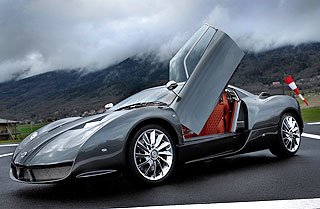
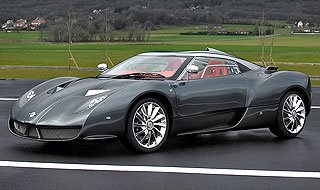
2007 Spyker C12 Zagato 42007 Spyker C12 Zagato2007 Spyker C12 Zagato 52007 Spyker C12 Zagato 32007 Spyker C12 Zagato 2 Geneva, Switzerland, 6 March 2007 Victor Muller, CEO of Spyker Cars, and Andrea Zagato, CEO of Zagato, today unveiled the Spyker C12 Zagato at the 77th Geneva International Motor Show. Norihiko Harada, Zagatos Automotive Chief Designer, and Muller co-operated closely to design this limited edition of 24 sports cars to be delivered from March 2008 onwards. The world premiere of this ultra-exclusive version of the C12 range celebrates Spykers entry into the world of Formula One and marks the first integration of design elements and styling cues from the Spyker F8-VII Formula One car into the Spyker road car range. This point was underlined by the unveiling of the car being performed by Spykers Formula One race driver, Adrian Sutil.

Partnership Spyker and Zagato

Victor Muller comments:

At the age of 18 I acquired my first Zagato bodied car: a Lancia Flavia Zagato rally car in dire need of restoration. Ever since that date, some 30 years ago, I have been in love with the unique and distinctive designs penned by this noble design house. Many Zagato bodied cars have followed the Lancia Flavia and I am proud to still have a number of Zagatos in my collection.

The co-operation and partnership between Spyker and Zagato is entirely logical if one looks at the rich heritage both companies share in the fields of aviation and racing. A better fit of aesthetics, skill and passion would be hard to find.

Two brothers, Jacobus and Hendrik-Jan Spijker, coach builders in Amsterdam, built their first Benzengined motor car in 1898 and won immediate acclaim for the supreme craftsmanship of their bodywork. In the period prior to World War I, a worldwide slump in the luxury car market meant that Spyker had to diversify its production, and so it merged with the Dutch Aircraft Factory N.V. This combined company evolved its business model and started developing and building aircraft. After the war Spyker was able to return to its roots and resumed car production in 1919. True to its motto Nulla tenaci invia est via (For the tenacious no road is impassable), Spyker continued building record-breaking cars which now featured extensive aircraft influences, including sophisticated aerodynamics absorbed from the aircraft building years.

Similarly, Zagato was established at the end of World War I by Ugo Zagato, putting aircraft industry construction techniques to use in the expanding market for passenger vehicles. Just like the Spyker cars, Zagatos cars were advanced in design and became synonymous with light weight and excellent aerodynamics.

Spyker C12 Zagato: the rationale

Victor Muller continues: Andrea and myself have known each other for many years and met at events such as Pebble Beach Concours dElegance and Villa dEste Concorso dEleganza on numerous occasions. Last April, at Villa dEste, we sat down and discussed the increasing market demand for truly one-off and limited edition super sport cars. In a certain sense the modern market is not unlike the 1930s, where wealthy customers would order exotic bespoke designs from high-end coach builders on Rolls-Royce, Bentley, Delage, Delahaye and Isotta-Fraschini chassis, just to mention a few.

Zagato established its name by designing exquisite cars for Lancia, Alfa Romeo and Ferrari in particular, but it is probably the Aston Martin DB4 Zagato that best represents the artistic expertise of what they do. Andrea and I agreed to meet each other in Arese and to define what a Spyker Zagato would have to embody. In view of market demand, it was decided to use Spykers flagship chassis, the C12, as a basis -its space-frame being exceptionally suitable for crafting a bespoke body onto.

After the initial design meeting in July 2006, it became apparent that Spyker would succeed in acquiring the Midland Formula 1 team and design activities were suspended until early October when that transaction had been consummated. With the F1 team part of the Spyker Group it was decided that the C12 Zagato should embody as many of the Formula 1 design cues as practically possible so as to set a new design vision for future Spyker road car models.

In the months following, Spyker and Zagato finalized the design and the manufacturing of the C12 Zagato was entrusted to Spykers long time fabrication partner, Coventry Prototype Panels in Coventry, UK. Under the guidance of Brendan OToole, CPPs Managing Director, and tienne Beijersbergen van Henegouwen, Spykers Project Manager, the vehicle was built by a dedicated Spyker and CPP crew from aluminium in an amazing 4 weeks.

Spyker C12 Zagato: the vehicle

The Spyker C12 Zagato is an all aluminium rear wheel drive sports car, based on the Spyker C12 Spyder. The C12 is powered by the 6.0 liter, 12 cylinder, 500 bhp W12 engine from Volkswagen AG and accelerates from 0-100 km (0-60 mph) in 3.8 seconds. The Spyker C12 Zagato is equipped with a six-speed manual or automatic gear box with F1 style shifting, Chronoswiss instruments and a Zagato designed full leather interior with brushed aluminium instrument panel. The C12 Zagato has an aluminium body with stainless steel roof rails and has many F1 derived design details such as an F1 nose, air scoop, chimneys, mirrors, rain light, fuel flap and diffuser. It has a panoramic roof that features the Double Bubble, a typical Zagato style element. The Spyker C12 Zagato has a length of 4.5 m, a width of 2.02 m excluding mirrors, a height of 1.25 m and weighs 1480 kg. The fuel tank capacity is 70 litres (15.4 gallons). Top speed is 310 km/h (193 mph).

The Spyker and Zagato Atelier brands perfectly align because of their common aeronautical origins and because of the shared passion of Victor Muller and myself for sports cars states Andrea Zagato. Nevertheless Victor, before starting this extraordinary adventure with Spyker, was a Zagato collector owning cars like the Flaminia SS and TZ. Together with our neo-classical approach, this Spyker C12 Zagato shows the capabilities of Zagato Atelier for innovative and non conventional solutions.

Norihiko Harada, designer of the new Spyker C12 Zagato, adds: All Spyker cars have their own very unique style: the aeronautical retrospective style co-exists with craftsmanship and elegance. The new Zagato body becomes even more unique, aggressive and sensual at the same time. It features a new double bubble panoramic roof , F1 influenced nose and air intakes, chimney and a coda tronca, the typical Zagato cut off tail end.

Maintaining Spykers styling philosophy, Zagato design put all these elements together and created an extremely stimulating example of contemporary exotic high performance sports car by using typical modern Zagato lines which started from the Raptor Zagato in 1996.

The Spyker C12 Zagato will retail for EUR 495,000 (excluding any taxes, ex factory).

Wednesday, March 7, 2007

Jaguar's Renaissance Comes to 2007 Geneva Motor Show

2007 Jaguar XKRs
2007 Jaguar XKRs

Jaguar's product-led renaissance is on display at the Geneva Auto Show with a redesigned 2008 Jaguar XJ and the special edition Jaguar XKR Portfolio version of the popular Jaguar XK coupe and convertible.

Jaguar's recent products have impressed auto writers and consumers, resulting in praise and increased sales for the Jaguar XK and top ratings for the brand in quality surveys like those from J.D. Power.

Jaguar's flagship 2008 Jaguar XJ comes with exterior design changes, interior improvements, technological advances, and additional features on the sedan's already unique all-aluminum body. The redesigned front end includes a new bumper, upper and lower mesh grilles with chrome detailing, two power vents and door mirrors with indicator lights.

“Every Jaguar must have a distinctive face, something that you cannot mistake if you catch a glimpse of it in your rear-view mirror as it powers up behind you," said Ian Callum, design director at Jaguar. "The new 2008 Jaguar XJ range meets that challenge thanks to a new grille and bold new bumper style.”

Besides the reshaped rear bumper, the 2008 Jaguar XJ has a new spoiler and revised tailpipe.

Interior changes include new standard heated front seats with optional air cooling and new leather trim. Revisions to the front seats provide greater leg and foot room for rear seat passengers.

Like previous models, the 2008 Jaguar XJ's aluminum monocoque design (in which the body is integrated into a single unit with the chassis) offers increased stiffness and reduced weight, producing faster acceleration and improved handling. The Jaguar XJ's long wheelbase model is actually lighter than many competitors' standard wheelbase platforms.

Jaguar's advanced technology is upgraded with the latest Bluetooth ® system that allows up to five approved mobile phones to connect with the car's own telephone system. Many of the vehicle's main functions can be controlled through JaguarVoice -- a simple to use voice command system. Adaptive Cruise Control is available along with safety features like Adaptive Restraint technology that calculates appropriate airbag deployment based on passenger weight and position.

Jaguar is also introducing the Portfolio version of the XKR. The special edition Portfolio XKR adds further technology and luxury to the supercharged Jaguar XKR. Available as either coupe or convertible, the Jaguar XKR Portfolio adds exclusive Celestial Black exterior paint, 20-inch polished Cremona five-spoke alloy wheels and Alcon® 15.75" (400mm) front brake discs – an increase of 1.77-inch (45mm) over the standard Jaguar XKR.

On the inside, a unique Engine-Spin aluminum veneer is standard on the Portfolio with a Satin American Walnut veneer as an option. Also new is an alloy and leather gearshift selector, soft-grab door handles, contrast stitching throughout the cabin, leather-edged mats with a Jaguar logo and distinctive Portfolio treadplates on the doorsills.

The Jaguar XKR Portfolio marks Jaguar's first production example of its new partnership with audio entertainment specialists Bowers & Wilkins. The world-leading loudspeaker manufacturer worked alongside Jaguar to create a stunning speaker system for the recent C-XF concept car, but the Jaguar XKR Portfolio is the first production Jaguar to benefit from the relationship.

Taking Jaguar’s 525W Premium Audio system with Dolby Pro Logic II surround sound as a starting point, Bowers & Wilkins tuned a signature speaker system specifically for the Jaguar XKR’s cabin. High-output, low-distortion Kevlar mid-range speakers and specially designed aluminum-dome tweeters deliver superb mid-range and extended high-frequency responses.

Like the Jaguar XKR, the Portfolio edition is powered by a new 4.2-liter supercharged AJ-V8 engine, producing 420bhp at 6,250 rpm and 413 lb-ft of torque at 4,000 rpm. The new engine increases power by 120bhp over the normally aspirated 4.2-liter engine in the XK.

The engine along with a significantly stiffer and lighter aluminum monocoque body structure results in times from 0 to 60mph in 4.9 seconds for the coupe and 5.0 seconds for the convertible.

The V8 engine is mated to Jaguar's Sequential Shift that combines the best characteristics of both manual and automatic transmissions. Controlled by steering-wheel mounted paddles and a conventional gear selector lever, the system provides three modes of operation – Drive for normal automatic, Sport for more demanding conditions and Manual that delivers a manual gear shift feel from an automatic transmission.

Jaguar's transmission avoids the typical interruption of torque at gear changes by maintaining the torque flow throughout the shifting process, resulting in gear changes occurring in less than 600 milliseconds.

Geneva show goers will get their first look at the hit of the recent North American Auto Show, the Jaguar C-XF concept.

"When we launched the new Jaguar XK sports car series, we moved ahead on the product-led transformation of Jaguar," said Bibiana Boerio, managing director of Jaguar Cars. "The Jaguar C-XF proves that these same values are coming in Jaguar saloon cars."

The Jaguar C-XF was named Best in Show at Detroit by AutoWeek.

“The Jaguar C-XF is the sexiest four-door we’ve seen from Jaguar in years,” said Dutch Mandel, editor and associate publisher, AutoWeek. “This car draws a line from Jaguar sedans of the past to Jaguar sedans of the future.”

"The Jaguar C-XF concept is the most dynamic and modern four-door car that Jaguar has ever created," Callum said. "Jaguars should be perceived as cool cars that attract interesting, edgy people. The next generations of Jaguars will do just that."

Source: Jaguar / Ford Motor Company

Mitsubishi Motors' Lineup at 2007 Geneva International Motor Show

European market Mitsubishi Outlander on-road SUV unveiled
Mitsubishi Outlander
Mitsubishi Outlander (European market)

Mitsubishi Motors Corporation today unveils the European market version of the Mitsubishi Outlander on-road SUV and shows the Mitsubishi Prototype-X concept for a next-generation high-performance 4WD sedan at the 2007 Geneva International Motor Show. The company is displaying a total of 10 exhibits (16 during the general public session) at the show which runs from March 6 through 18 at the Geneva Palexpo exhibition and conference complex, opening to the general public on March 8.

For the European market, the Mitsubishi Outlander lineup starts with a 2.0-liter turbo-charged diesel engine. Other changes introduced for the European market include a new front grille with the 3-diamond logo mounted on a Mt Fuji-motif plinth that provides a central element of the Mitsubishi brand design identity in the European market, as well as Euro-specific chassis tuning.

Speaking at the MMC press conference at 10:30 am local time today, Mitsubishi Motors' president Osamu Masuko made the following remarks.

"Mitsubishi Motors has performed successfully in the European market while increasing sales volume and being profitable since fiscal 2003. And in the first nine months of the current fiscal year the company sold 206,000 vehicles, which represents an increase of 5% over the same period last year and made a significant contribution to the company's return to the black for the period October through December last year. We are confident that the new Mitsubishi Outlander on-road SUV unveiled here today together with the later introduction in fiscal 2007 of a new Mitsubishi Lancer sports sedan and the new Mitsubishi Lancer Evolution — the production version of the Mitsubishi Prototype-X concept — will boost the strength of our product lineup and see us maintaining sales volume."

1. Mitsubishi Outlander European market product features:

* The European market Mitsubishi Outlander is an on-road SUV that raises the bar on fun-to-drive and fun-to-use. A new-age global platform, which is stiffer, a sharp chassis and an electronically-controlled 4WD system contribute to feel-good response and faithful and predictable handling. Features enhancing Outlander's comfort and utility, meanwhile, include the split tailgate and auto-folding function for the second row seats and Hide&Seat™" retractable third row. Following its October 2005 launch in Japan and 2006 launch in North America and China, the European introduction at the Geneva Motor Show sees Mitsubishi Outlander on sale in all the world's major auto markets.
* To meet local market needs the European Mitsubishi Outlander will be offered with a choice of three engines : 2.0-liter turbo-diesel will be joined by a 2.2-liter turbo-diesel and a 2.4-liter MIVEC*1 petrol. The latter is fitted to the Japanese market model. A Euro-4 version of the 3.0-liter MIVEC V6 petrol unit that powers some U.S., Russian, Ukrainian and Chinese market models is also under study for Europe.
* The European Mitsubishi Outlander features a number of styling changes, including the use of a new front grille that locates the 3-diamond logo mounted on a Mt Fuji-motif plinth, a central element in the brand design identity for Mitsubishi models sold in Europe.

*1 MIVEC : Mitsubishi Innovative Valve lift and timing Electronic Control. Mitsubishi Motors' own variable valve lift (VVL) system.

Mitsubishi Prototype-X

2. Mitsubishi Prototype-X product features

* Shown at the Detroit Motor Show in January 2007, the Mitsubishi Prototype-X is a design study for the new Lancer Evolution due to be launched during the 2007 fiscal year. Derived from the all-new Lancer sports sedan due to be launched in America in March this year, Mitsubishi Prototype-X features a firmly functional design crafted to produce a handsome and purposeful appearance. The exterior styling forcefully projects the car's ruggedly athletic performance qualities while the strongly function-oriented design and high-quality materials used in the interior encourage the driver to concentrate on operating his machine.
* Mitsubishi's Prototype-X is loaded with the very latest in MMC automotive engineering technology. Mechanical features include: Mitsubishi's S-AWC*2 vehicle dynamics system built around a 4WD driveline; a new aluminum block MIVEC turbocharged engine mated to a high-performance six-speed automated manual transmission; and the use of aluminum in some body panels to reduce body weight.

*2 S-AWC : Super All-Wheel Control. : Vehicle dynamics system that integrates control of drive torque, braking, steering and suspension at all four wheels.

Mitsubishi Motors lineup at 2007 Geneva Motor Show

Model No. on display
(Press days)
No. on display
(Public days)
Remarks
Outlander 4 4 New model.
Prototype-X 1 1 Show car.
Displayed at 2007 Detroit Motor Show.
Pajero Evolution 1 1 Show car.
Displayed at 2007 Detroit Motor Show.
Mitsubishi Model-A 1 1 Show car.
Replica of first (1917) Mitsubishi car.
Outlander V6-Concept 1 1 Show car.
Powered by 3.0 V6 engine.
Pajero 1 1 Newly introduced next generation model
L200 1 1 Built in Thailand
(Triton on Japanese market)
Lancer Evolution IX 1* 1 *On display from March 7 (Press day 2)
Colt - 1 5-door Hatchback - Built in Europe.
Colt CZC - 1 Coupe-Cabriolet - Built in Europe.
Colt CZT - 1 3-door turbo-charged - Built in Europe.
Grandis - 1
Outlander - 1 Current model.
Total 10 16


Source: Mitsubishi Motors Corporation

Volvo at the 2007 Geneva Motor Show with Two Global Debuts

  • All-New Volvo XC70, the next generation of Volvo's segment defining crossover
  • All-New Volvo V70, staking claim as a segment leader take the stage in Europe's first major auto show
Volvo XC70
All-New Volvo XC70. (PRNewsFoto/Volvo Cars of North America)

The all-new Volvo XC70 is being introduced at the Geneva Motor Show with comprehensive changes inside and out. With new styling cues, improved driving dynamics, inspiring technological applications, added luxury and of course new developments in safety, Volvo ups the ante in taking its popular crossover to the next level.

"We had a winning concept from the very outset and we have continuously refined it," says Fredrik Arp, president and CEO of Volvo Car Corp. "The all-new Volvo XC70 maintains its tough, capable attitude while at the same time growing more comfortable. Additionally, our design team has given the vehicle a more elegant, more luxurious look."

As a leader in the wagon segment with 54 years of continuous refinement and improvement, Volvo is also introducing the all-new Volvo V70 in Geneva. With its perfect balance of luxury, versatility and safety, the all-new Volvo V70 sets the standard for premium wagons.

"This segment has been our specialty ever since we invented it back in the 1950s," said Volvo Cars President and CEO Fredrik Arp. "Our competitors can count on us remaining number one in the future, too. In the all-new Volvo V70, rear passengers and luggage both ride in first class."


Volvo V70
All-New Volvo V70. (PRNewsFoto/Volvo Cars of North America)


For more information go to: www.volvocars.com

Source: Volvo Cars of North America

Mercedes-Benz at the 2007 Geneva Motor Show

Triple premiere for the new Mercedes-Benz C-Class

Mercedes-Benz Vision C 220 BLUETEC
Dieter Zetsche, Chairman of the Board of DaimlerChrysler AG and Head of the Mercedes Car Group presents the highly economical and environmentally friendly Mercedes-Benz Vision C 220 BLUETEC in Geneva. In the study based on the new Mercedes-Benz C-Class, Mercedes-Benz is presenting its innovative BLUETEC emissions control technology for the first time in combination with a highly fuel-efficient four-cylinder engine.

Geneva, Mar 06, 2007 -- The new Mercedes-Benz C-Class is celebrating a triple premiere at the 77th Geneva Motor Show: in addition to the standard-production model, the "AMG-Mercedes C-Class DTM 2007" racing version and the highly economical and environmentally friendly Mercedes-Benz Vision C 220 BLUETEC, which is powered by the first four-cylinder engine to feature this innovative emissions control technology, have their debut at the show. With a fuel consumption of 5.5 litres of diesel per 100 kilometres, this study demonstrates how the even more stringent EURO 6 exhaust emission standard coming into force throughout Europe from 2015 can be achieved. Clean and economical engines are also the hallmark of the new Mercedes-Benz C-Class, which is available on the European market from March 31.

"Since the sales release date at the end of January, more than 55,000 customers in western Europe alone have decided in favour of the new C-Class," said Dr Dieter Zetsche, Chairman of the Board of Management of DaimlerChrysler AG and Head of the Mercedes Car Group, in his preliminary remarks at the Mercedes-Benz press conference in Geneva. "We are confident that the new Mercedes-Benz C-Class will continue the success story of its predecessor, of which more than two million units were sold," Zetsche continued.

The fourth-generation Mercedes-Benz C-Class has captured the enthusiasm of customers with its unique combination of safety, comfort and agility. The standard appointments of all variants include the innovative AGILITY CONTROL package with its situation-responsive shock-absorber control, which opens up new dimensions in handling refinement: it combines typical Mercedes comfort with extraordinarily agile driving characteristics. The new Mercedes-Benz C-Class is powered by state-of-the-art four and six cylinder engines which consume up to six percent less fuel than the preceding models, accompanied by an increase in output of up to 13 percent. Despite a variety of technical innovations and even more generous standard appointments, and taking inflation into account, the price of the new Mercedes-Benz C-Class remains at the same level as that of the preceding series. In Germany and other European countries, the entry-level price including tax is still below 30,000 €.

Exemplary safety and a versatile product concept

The Mercedes-Benz C-Class also sets new standards in its segment where safety is concerned. Examples include the Intelligent Light System with five different lighting functions and the PRE-SAFE® system with its anticipatory occupant protection features. In addition, the new Mercedes-Benz C-Class Saloon excels with a particularly versatile product concept which meets the expectations of different customer target groups. In the form of the AVANTGARDE, ELEGANCE and CLASSIC lines, Mercedes-Benz offers three individual model variants which place different emphases on comfort or agility.

Mercedes-Benz C-Class AVANTGARDE
Mercedes-Benz C-Class AVANTGARDE model

The concept of two different product personalities within the same series is also given a visual emphasis in the new Mercedes-Benz C-Class, as it is the first Mercedes saloon to appear with two different "faces": the AVANTGARDE models have the Mercedes star at the centre of the radiator grille and thereby follow the styling lead of the sporty Mercedes models, especially the coupés. The more traditional ELEGANCE and CLASSIC variants bear the star on the bonnet as before.

World premiere of the first BLUETEC four-cylinder engine in the Vision C 220 BLUETEC

In a study based on the new Mercedes-Benz C-Class, Mercedes-Benz is also presenting its innovative BLUETEC emissions control technology in combination with a highly fuel-efficient four-cylinder engine for the first time in Geneva. In terms of ensuring compliance with the even stricter EURO 6 emission standard, applicable to all new vehicles Europe-wide from 2015, the Mercedes-Benz Vision C 220 BLUETEC shows the way ahead. Boasting an output of 125 kW (170 hp) and a peak torque of 400 Nm, the Vision C 220 BLUETEC consumes a mere 5.5 litres of diesel per hundred kilometres.

"The sophisticated four-cylinder diesel engine with BLUETEC emission control is a prime example of leading-edge, future-compatible technology," explains Dr Dieter Zetsche. "Our diesel strategy is an effective answer to the question of how to save fuel and, therefore, CO2, how to further reduce all exhaust emissions including NOx and yet still ensure effortlessly superior driving enjoyment. In this respect, we believe our state-of-the-art diesel concept is currently the best and most efficient solution available."

With the Mercedes-Benz Vision C 220 BLUETEC, Mercedes-Benz is providing a taste of things to come as part of its BLUETEC initiative which was launched in the US last autumn. The initial impetus came from the market launch of the E 320 BLUETEC in North America in October 2006, which was timed to coincide with the introduction of low-sulphur diesel in that part of the world. A fuel consumption figure of 6.7 litres per hundred kilometres makes the E 320 BLUETEC one of the most economical vehicles in its class in the US.

With the first four-cylinder BLUETEC model, Mercedes-Benz illustrates just how versatile this innovative technology can be. Following the US launch, the company will also introduce BLUETEC in other markets. The technology is currently being adapted to European market requirements and further Mercedes Benz models, the aim being to also offer this environmentally friendly and highly economical technology for European customers as well from 2008, first of all in the Mercedes-Benz E-Class.

New C-Class: CO2 emissions already reduced by 15 percent

The standard-production version of the new Mercedes-Benz C-Class is testament to the successful work performed by Mercedes-Benz in its quest to consistently reduce both fuel consumption and emissions. A lifecycle assessment carried out on the new Saloon, certified by the German technical inspection authorities (TÜV), confirms that the carbon dioxide (CO2) emissions for what is now the fourth-generation Mercedes-Benz C Class have been reduced by 15 percent. This corresponds to nine tonnes per vehicle. This makes the new Mercedes-Benz C-Class the only car in its market segment to possess an environmental certificate.


Source: DaimlerChrysler

Tuesday, March 6, 2007

Opel Reveals Striking Opel GTC Concept Car in Geneva

Opel GTC Concept
Opel GTC Concept -- Gran Turismo Coupé (European Pressphoto Agency)

On the eve of the 77th Geneva Motor Show, Opel illuminated the night. Supported by a dramatic light show, the Opel GTC Concept (Gran Turismo Coupé) made its spectacular debut at the "GM Premiere Night."

Heralding a new design era for the brand, the Opel GTC Concept gives an insight into how Opel's design language will look in the future. Adding to progressive shapes and surfaces, the four-seat coupé features unique LED lighting concepts in the front and rear, providing a new signature lighting style for the brand.

The reveal's exciting light show highlighted the Opel GTC Concept's signature illumination theme by utilizing state-of-the-art LED technology for the huge stage wall. The car then strutted down a long runway to its final resting spot on a turntable in the center of the room.

Visual effects of the evening were also part of the futuristic iBar concept: Items like mobile phones or drink glasses rested on the bar tops were connected by animation of the concept car and the Opel emblem. In addition, a common denominator of the show was the color red, reflecting the interior lighting theme of the concept car and the red line in its seats, steering wheel and tires.

Two live performances of the U.S. band "Pink Martini" and a fashion show of the hip Spanish label "Mango" rounded off the spectacular presentation of the Opel GTC Concept.

"This evening's presentation perfectly highlighted the Opel GTC Concept as the new interpretation of the Opel brand," explained Alain Visser, Executive Director, European Opel Marketing. "The concept car's exciting lines, high driving dynamics and interior flexibility reflect what the Opel brand trademark characteristics will be in the future."

"With the Opel GTC Concept our team envisioned the new essence of Opel - more confident, relevant and distinctive - in a high-performance four-seat coupé," said Bryan Nesbitt, Executive Director, GM Europe Design. "This style is what to expect of future Opel products."

Key elements of the Opel GTC Concept (length/width/height: 4830/1867/1432 millimeters, wheelbase: 2737 mm) begin with an aggressive front end performance face emphasized by large aluminum vertical intakes that intersect the headlamps. These vertical elements are mimicked in the rear exhaust elements. Another significant design cue of the two-door sport-coupé is the sophisticated bodyside shapes and surfacing.

Echoing the exterior, the interior visually articulates a dynamic driving experience and reveals a new standard of Opel aesthetics. Brand-typical on-board flexibility is ensured by the thoughtful "Flex4" system. The backs of both rear seats can be docked separately to the front seats by remote control, creating a spacious three or two-seater with flat load floor.

The Opel GTC Concept is powered by a 220 kW/300 hp, 2.8-liter V6 turbo gasoline engine and features an intelligent, electronically-controlled four-wheel drive system.

Source: Adam Opel GmbH

Wednesday, February 28, 2007

Fiat Bravo Takes a Bow in Solo Performance

GENEVA — Next week at the Geneva auto show, the Fiat stand will be devoted in its entirety to the 10 models that make up the Bravo lineup. The company hopes this move will maximize the effect of the show debut for the new model.

Fiat BravoFiat Bravo 2There will be engine variants from a 150-horsepower 1.4-liter gasoline engine to a 150-hp 1.9-liter Multijet diesel, a wide range of equipment levels, trim options and custom choices, and all kinds of enticingly named colors like Maranello Red, Maserati Blue, Provocative Black and so on.

This is not an unprecedented move for media days. A couple of years ago, Rover showed two prototypes of a forthcoming Mini replacement to journalists, but by the time the general public arrived, the stand had been rearranged and the one-off cars disappeared.

Fiat will also change the layout when the Geneva show opens to public scrutiny. Then the whole Fiat lineup will be presented, including the 100-hp Panda, the highly popular Sedici and the quirky Croma.

Also, the Geneva show will be the first opportunity for the Italian carmaker to show off its new logo.

Tuesday, February 27, 2007

Fiat at the 77th Geneva International Motor Show

Fiat Bravo
New Fiat Bravo

The Fiat stand at Geneva exudes stylistic and architectural appeal, and provides the ideal setting for the world premiere of the new Bravo and for the presentation of the Brand’s new logo to the general public.

It is clearly an important event, and Fiat has decided to prepare a spectacular presentation, dedicating the stand exclusively to a display of ten examples of the new Bravo on the first day, reserved for the international media, a significant decision that draws attention to the launch taking place simultaneously in numerous European countries. The ten Bravos will represent the whole range, outfitted with the Dynamic, Emotion and Sport specifications, equipped with the 120 and 150 bhp 1.9 Multijet engine and the 150 bhp 1.4 T-JET, ‘dressed’ in Maranello Red, Maserati Blue, Nocturnal Blue, Warm Grey, Provocative Black and Trusty Light Blue, and with interior upholstery in fabric and leather with a variety of shades and embroidery.

These truly beautiful cars will win the hearts of the public with their clean, smooth lines, which confirm Fiat’s intention both to build on the new ‘family feeling’ inaugurated with the Grande Punto; and to reinterpret the elements of the best Italian automotive styling tradition, without stylistic distortion or exaggeration. The same essential, smooth shapes are reflected in the whole display area which covers about 1200 square metres, an example of great formal simplicity and rigour, an effect reinforced by mirror surfaces and white used on the floor and walls and to highlight particularly striking elements.

The stand is a sleek rectangle against the side walls of the pavilion. The two-storey office building is built against this wall, while the remainder of the stand is earmarked for the cars. The upper storey is contained in a Barrisol prism, which creates a sinuous shape on the front, into which two large circular portholes are cut, while there are two large three-dimensional logos on the corners of the building. The ground floor is a welcoming space, furnished with a thick pile carpet, large anatomically shaped seats, and display units made of luminous portholes containing the merchandise and alloy wheels. Another striking scenographic effect is created by three large mirror-covered spheres which contain the concept lab dedicated entirely to the world of the 500.

The new 150 bhp 1.4 T-JET engine developed and manufactured by Fiat Powertrain Technologies, which is one of the elements of technological excellence present on the new Bravo, is also displayed on the stand.

And finally, on the days that the Show is open to the public, other models from the revamped Fiat range will be on display on the stand. Starting with the Panda 100 HP, a sporty version equipped with the sparkling 100 bhp 1.4 16v engine, and the exclusive Panda Monster (a limited, numbered edition of which just 695 will be produced), the expression of the best Italian styling combined with the technological supremacy that has always been the hallmark of Fiat and Ducati. In Geneva, the public will be able to appreciate the prestige of the Croma Model Year ’07, and the versatility of the Fiat Sedici which, together with the Panda 4x4, represents the brand’s presence in the off-road market with the precise goal of offering all the entertainment and safety that only four-wheel drive can guarantee. Last but not least, the Geneva Show is also an opportunity for visitors to take a closer look at the 2007 range of the Grande Punto which introduces significant improvements to the interior (new fabrics and colours) and greater value thanks to new standard equipment (depending on the market and the outfit): from manual climate control to the sophisticated Blue&Me® system.

Source: Fiat

Monday, February 26, 2007

TechArt Porsche GTstreet

GENEVA — German tuner TechArt continues to evolve its variations on the classic Porsche 911 Turbo. Its latest endeavor, called GTstreet, will make its debut at the Geneva auto show.

TechArt Porsche GTstreetTechArt conjured up a GTstreet edition of the previous-generation 911 Turbo in 2001. The most recent iteration, based on the 997 body, takes Porsche's legendary twin-turbo 3.6-liter flat-6 engine and squeezes out 630 horsepower (up from 480 hp) and 605 pound-feet of torque (up from 457 lb-ft).

The boost in output results in breathtaking performance figures: 0-60-mph acceleration in less than 3.2 seconds and a top speed of 214 mph.

TechArt also provides a full aero body kit for the GTstreet, and the usual interior modifications.

Thursday, February 22, 2007

Suzuki's "World Debut"

GENEVA — Japanese automaker Suzuki Motor, which has partnerships around the world, sent out a press release this week touting the upcoming "world debut" of its new SX4 sedan. Trouble is, we've actually seen this vehicle previously — in another country, with another badge, from another manufacturer.

suzuki new Tianyu sedansuzuki new Tianyu sedan 2Last fall at the Beijing Motor Show, Chinese automaker Changan Auto pulled the wraps off its new Tianyu sedan. Changan is partnered with several different overseas manufacturers, including Ford and Suzuki. The Tianyu, in fact, is none other than the SX4 sedan.

The SX4 sedan is the four-door notchback companion to the five-door SX4 compact crossover that was introduced last year in the United States. It is expected to share the five-door's 143-horsepower DOHC 2.0-liter four-cylinder engine and most of its running gear. It will go on sale later this year at U.S. dealerships as a 2008 model.

Suzuki's Geneva stand also will feature the Splash, a sneak peek at the company's forthcoming European MPV, as well as the latest iteration of Suzuki's WRC challenger, which enters competition in August.

Monday, February 19, 2007

Cadillac at the 2007 Salon International de l'Auto in Geneva

  • European premiere of the all-new 2008 Cadillac CTS Sedan
  • New interior and powertrain options for Cadillac SRX crossover
  • New Cadillac Escalade has arrived in Europe
  • All-wheel drive available for Cadillac STS with Northstar V-8 engine
  • New Sport package for Cadillac BLS
  • High-performance 2007 Cadillac STS-V and 2007 Cadillac XLR-V available in April
2008 Cadillac CTS Sedan

GENEVA, 2007-02-18 - Cadillac will open the next chapter of its 21st century product story, as the 2008 Cadillac CTS sedan makes its European premiere at the 2007 Salon International de l'Auto in Geneva, Switzerland. The new luxury sedan is scheduled to begin production in the United States, in late summer of 2007, with European sales to follow in the fall.

"The all-new CTS has a mission to bring the striking design of a concept car, the performance of a sports car and sophistication of an elegant sedan right into the heart of the luxury market," said Cadillac General Manager Jim Taylor. "Cadillac is injecting more dramatic character into the normally reserved luxury sedan category."

With a design inspired by Cadillac's landmark Sixteen concept car, the new CTS reinterprets the brand's traditional grandeur in a very contemporary design. CTS employs lessons learned from Cadillac's acclaimed V-Series of high-performance cars, combining sports car-like performance with the poise of prestigious luxury sedans.

Advanced direct-injection gasoline technology helps deliver an estimated 223 kW (300 horsepower) with good fuel efficiency and reduced emissions from its new 3.6L V-6 engine.

The all-new CTS chassis was developed with extensive testing around the globe, from famed German raceways to roads in China and the United States.

Cadillac's first-generation CTS built a strong record of success on many levels, beginning with its debut in 2002. There are about 275,000 CTS owners worldwide, and industry researchers say they are among the most satisfied in the automotive market.

2007 Cadillac SRX receives exterior, interior refinements

The Cadillac SRX luxury crossover enters 2007 with exterior refinements and a completely redesigned interior. The all-new cockpit is more luxurious and spacious, featuring a new instrument panel, hand-wrapped upper trim, console, center stack, door trim, wood trim, analog clock and steering wheel.

The instrument panel and door trim use Cadillac's new cut-and-sew interior process. The vehicle's new cockpit is hand-built, in the same painstaking fashion Cadillac applies to the limited-production STS-V and XLR-V models, bringing elite craftsmanship into the heart of the luxury marketplace.

New for 2007 is the Hydra-Matic 6L50 six-speed automatic transmission, which provides increased performance and fuel efficiency. First introduced on Cadillac's acclaimed STS-V and XLR-V Series in 2006, the new transmission is now standard for the all-wheel-drive V-8 model. A new and competitively priced rear-wheel-drive V-6 model also enters the SRX lineup.

Next-generation Cadillac Escalade debuts

The all-new 2007 Cadillac Escalade, the next generation of the iconic luxury SUV, establishes new levels of power, style and elegance.

Based on General Motors' all-new full-size SUV architecture, the '07 Escalade features new powertrain, chassis, safety and interior systems. These integrated systems deliver a powerful, efficient luxury SUV in the segment, led by a new 6.2L all-aluminum V8 engine with variable valve timing technology, delivering 301 kW (409 horsepower) and 565 Nm (417 lb-ft) of torque.

The Cadillac Escalade has a sleek, clean and athletic form with improved aerodynamics. It is instantly identifiable and incorporates styling cues from Cadillac's landmark Sixteen concept vehicle, including a more detailed signature grille, front fender vent ports and chrome accents.

A feature-packed, spacious and all-new interior is a cornerstone of the new Cadillac Escalade, and it sets a new standard for refinement. The warm and inviting interior is complemented with premium materials.

The Cadillac Escalade went on sale in Europe at the end of January.

Cadillac STS adds all-wheel drive

The Cadillac STS luxury performance sedan delivers sophisticated luxury in a contemporary package. For 2007, Cadillac is making available all-wheel drive - in combination with the Northstar V-8 engine - to meet the growing demand for this technology.

New for 2007 is the Hydra-Matic 6L50 six-speed automatic transmission that provides increased performance and fuel efficiency; it is standard on AWD and RWD V-8-equipped models. The new transmission features a generous 6.04:1 overall ratio that delivers strong launch acceleration yet provides "tall" overdrive ratios that decrease engine rpm to enhance fuel economy and reduce noise levels while cruising at highway speeds. Estimates by GM engineers have shown an approximately 7-percent improvement in 0-100km/h (0-62 mph) times and up to a 5-percent improvement in fuel efficiency.

2007 Cadillac BLS range expands

The 2007 Cadillac BLS range will be extended by the BLS Sport, which features 18-inch wheels and lowered sport suspension. The revised chassis tuning ensures dynamic handling performance without compromising comfort, and is designed to take full advantage of the BLS range's powerful engines.

The front-wheel-drive BLS offers expressive design combined with outstanding ride and acoustic comfort. It also marks a new era in Cadillac's history by offering an optional direct-injected, common rail turbo-diesel engine that is fitted with a maintenance-free diesel particulate filter. Like the turbocharged gasoline engines (129 kW / 175 hp; 154 kW / 210 hp; and 188 kW / 255 hp), the turbo-diesel (110 kW / 150hp) offers the dynamic performance customers have come to expect from Cadillac.

All BLS models equipped with manual transmissions have six speeds. For all gasoline and diesel models equipped with an automatic transmission, a standard Sport Mode button allows the driver to select a sportier transmission shift pattern.

The BLS Sport interior is highlighted by the use of stylish aluminum trim instead of wood and the circular instruments have white numerals and red needles on a black background. A three-spoke leather-wrapped steering wheel and analog clock in the center stack are standard. Optional refinements include leather seating surfaces.

2007 Cadillac XLR-V and 2007 Cadillac STS-V combine power, performance

The supercharged 2007 Cadillac XLR-V and STS-V are Cadillac's most intense expressions of power and performance. Both high-performance vehicles feature Cadillac's cut-and-sew approach to interiors, with extensive use of leather-wrapped interior surfaces created by craftsmen who cut, wrap and sew leather components individually. Each supercharged Northstar V-8 engine powering the XLR-V and STS-V is hand-assembled by a single expert craftsman to exacting standards at GM's Performance Build Center in Wixom, Mich., USA.

The 2007 Cadillac XLR-V is a landmark car in Cadillac's long history. XLR-V elevates the performance and luxury attributes of the brand's growing V-Series lineup to the fullest extent; it is the quickest, most agile and most exclusive Cadillac model ever offered. The supercharged Northstar V-8 engine delivers 331 kW (448 hp) and 561 Nm (414 lb.-ft.) of torque, elevating the luxury roadster into the exclusive club of vehicles that are capable of accelerating from 0-100km/h (0-62 mph) in less than five seconds.

The 2007 Cadillac STS-V has the sophistication of its STS sibling, but with the uncompromising performance driving experience for which the V-Series is known. The STS-V delivers 350 kW (476 hp) and 595 Nm (439 lb.-ft.) of torque - and is the most powerful Cadillac ever. Like the Cadillac XLR-V, the STS-V is capable of accelerating from 0-100km/h (0-62 mph) in less than five seconds.

Both Cadillac XLR-V and Cadillac STS-V will be in European Cadillac showrooms in April.

Source: Cadillac and Corvette Europe