Showing posts with label Hyundai. Show all posts

Thursday, January 10, 2008

2009 Hyundai Genesis

- Hyundai crafts a rival to $60,000 sports sedans...with a starting price under $30,000
- Rear-wheel drive and high-output V8 engine deliver world-class driving experience

FOUNTAIN VALLEY, Calif., 01/08/2008 -- Hyundai aims to shatter premium automobile paradigms with the North American International Auto Show introduction of its new flagship, the all-new Genesis sports sedan on January 13. With capabilities and features comparable to $60,000 premium sedans, Genesis will be offered at a starting price under $30,000 when it goes on sale this summer.

2009 Hyundai Genesis2009 Hyundai Genesis

Genesis is built on Hyundai’s all-new, performance-driven rear-wheel-drive architecture. It offers three powertrains, including 3.3-liter and 3.8-liter V6 engines, and Hyundai’s all-new 4.6-liter Tau V8. Tau will produce an estimated 368 horsepower on regular fuel, and lead all its competitors in specific output with 80 horsepower per liter. With technology rivaling more expensive luxury sedans, Genesis showcases features such as XM NavTraffic, Adaptive Front Lighting System (AFLS), Smart Cruise Control, Lexicon® audio systems and electronic active head restraints.

“While Genesis will compete for customers with cars like Chrysler 300 and Pontiac G8, our engineering benchmarks were Mercedes E-Class, Infiniti M, and Lexus GS,” said John Krafcik, vice president, product development and strategic planning, Hyundai Motor America. “Genesis provides a potent combination of performance, luxury, and value. We think it has the opportunity to be an extremely disruptive force in the large sedan and near-luxury segments.” Genesis ushers in a new era for Hyundai. Its all-new rear-wheel drive architecture will spawn more products in other segments, as suggested by the Concept Genesis Coupe shown at the Los Angeles Auto Show in November 2007.

NEW PERFORMANCE-DRIVEN REAR-WHEEL-DRIVE ARCHITECTURE

Genesis is built on an all-new rear-wheel-drive architecture, its first application in a U.S. Hyundai model. Genesis boasts a near ideal 53/47 front-to-rear weight distribution for exceptional handling and more refined steering characteristics. The rear-wheel-drive layout allowed engineers to position the car’s front wheels farther forward delivering outstanding handling and steering performance. Standard Electronic Stability Control (ESC), the industry’s most important new safety technology, further enhances the vehicle’s driving confidence. Hyundai leads all popular car brands in the standard application of ESC, with more than 70 percent of 2007 Hyundai sales featuring ESC as standard equipment.

Genesis reduces interior noise levels and improves ride and handling with a stiffer, lighter body structure. The use of high tensile steel in critical areas in the unibody provides Genesis with 12-14 percent higher dynamic torsional rigidity and a lower body structure weight than the BMW 5-series and Mercedes-Benz E-Class – despite having a substantially larger cabin than either of those benchmarks. Hyundai Genesis has more interior volume than Mercedes Benz E-Class and BMW 7-Series.

WORLD-CLASS Tau V8

Headlining the Genesis’ performance capabilities is Hyundai’s all-new Tau 4.6-liter V8 engine mated to a ZF 6-speed automatic transmission with SHIFTRONIC® manual control. The Tau V8 delivers an estimated 368 horsepower to fit the demands of performance-oriented consumers. Unlike many competitors and most premium sedans, it achieves this impressive power output using regular unleaded fuel – further demonstration of Hyundai’s commitment to value. This powertrain combination will launch Genesis to 60 miles per hour in less than six seconds. The Tau produces more horsepower and torque than the powerplants found in Lexus GS450, BMW 750i, Audi A8 and Infiniti M45 and has more horsepower per liter than any of its V8 competitors. The Tau engine is built with flexibility for the future. Future Tau variants may offer larger displacement, forced induction options and other technology enhancements.

STRONG LAMBDA V6 PERFORMANCE

Genesis also delivers spirited performance through its two V6 options -- all-aluminum 3.3-liter and 3.8-liter DOHC V6 engines that deliver an estimated 268 horsepower and 233 lb-ft. of torque and an estimated 290 horsepower and 264 lb.-ft. of torque, respectively. To maximize the power spread, the engines utilize Continuously Variable Valve Timing (CVVT) on intake and exhaust cam shafts and a new Variable Intake System (VIS) that helps cylinders breathe efficiently at low and high RPM. The better breathing results in outstanding off-the-line acceleration and passing performance, and remarkable fuel efficiency. The V6 engines use an alloy block and cylinder heads for lighter weight and thermal efficiency, and feature timing chains with no scheduled maintenance. Even with their impressive output, all Genesis engines are also environmentally friendly, with all three achieving Ultra Low Emission Vehicle (ULEV) certification levels.

ADVANCED 6-SPEED TRANSMISSIONS

Both Genesis V6 engines use an Aisin 6-speed SHIFTRONIC automatic transmission that features an overdrive lock-up torque converter for improved highway fuel economy. The transmission offers smooth shifts and a wide spread of ratios that ideally suit both engine's characteristics including a tall-overdrive sixth gear for quiet, efficient highway cruising. Drivers can access the SHIFTRONIC® feature by moving the gear selector into a separate gate. Pushing the selector forward or pulling it rearward will shift the transmission up or down sequentially, adding to driver control. A clear LCD readout on the instrument panel shows the gear that's in use.

The Tau V8 Genesis is mated with an enhanced, high-output ZF 6-speed transmission to handle the added horsepower and torque.

INNOVATIVE AND SOPHISTICATED SPORT-TUNED SUSPENSION

Genesis features a suspension design that is among the most sophisticated and refined anywhere, at any price. The front five-link suspension features upper and lower arms linking the front wheels to the chassis. This artfully articulated arrangement creates a virtual king pin axis that dramatically reduces unwanted kickback through the steering wheel as well as improving responsiveness. The five-link independent rear suspension is equally sophisticated, enabling precise suspension geometry for a premium ride and engaging handling prowess. The capabilities of the advanced front and rear-suspension are maximized through Amplitude Selective Dampers (ASD) allowing tuning flexibility at smaller damper displacements. The ASD suspension provides:
· Improved ride comfort with more body / wheel control
· Increase driving comfort without compromised handling
· Optimizes road surface contact
· Technology used in Lexus, BMW and Mercedes-Benz models

PROGRESSIVE DESIGN MIRRORS ATHLETIC CAPABILITY

Genesis’ design is a progressive interpretation of the modern rear-wheel drive sports sedan. To match its dynamic capabilities, Genesis combines strong, sculpted forms which integrate precise details, natural materials and innovative lighting to provide a well-crafted, premium design aesthetic.

HIGH-TECH ACCOMMODATIONS AT ACCESSIBLE PRICE POINTS

The new 2009 Genesis is the most advanced Hyundai ever. From its design and spaciousness to its technology and appointments, it delivers a wealth of features and performance befitting flagship European and Asian brands, but delivers them at a much more accessible price point. Starting with its Lexicon state-of-the-art audio system featuring LOGIC 7® technology, Genesis offers an extraordinary combination of technology, premium appointments, and value. Standard is a soft-touch instrument panel with woodgrain accents, Bluetooth® hands-free mobile phone interface, and USB/iPod® auxiliary inputs. A state-of-the-art navigation system with an eight-inch display is available. The navigation unit is accessed by a user-friendly multi-media controller that also controls the radio. Backing out of tight spaces and avoiding mishaps is much easier with the available backup camera that uses the eight-inch display to show the driver a clear view immediately behind the car.

A leather-wrapped dash, door panels, and console lid surround the driver in a luxurious environment, while heated and cooled driver’s seat provides optimal driving comfort. An automatic windshield defogger with humidity sensor and rain-sensing wipers allow crystal clear sight lines. No other car in the segment offers an ultraviolet reflective leather steering wheel, which keeps the surface cool to the touch, even in scorching sunlight. Genesis also offers the conveniences of power rear sunshade, automatic electronic parking brake, proximity key and push button starter.

LEXICON® AUDIO SYSTEMS TEAM WITH XM, HD RADIO™, and APPLE TO OFFER UNRIVALED AUDIO PERFORMANCE AND CHOICE

Rolls Royce Phantom and Hyundai Genesis are the only automobiles to offer a Lexicon-branded state-of-the-art audio system featuring LOGIC 7® technology. The Lexicon® surround sound audio system includes a 12-channel digital amplifier and 17 speakers producing more than 500 watts of sound in 7.1 discrete audio. Genesis is also the first popular brand to offer the clarity of digital HD Radio technology from the factory. Navigation-equipped Genesis models also include a 30-gigabyte hard drive and XM NavTraffic. Like every 2009 Hyundai, Genesis comes standard with XM Satellite Radio. Auxiliary USB and iPod® inputs allow drivers to fully control and charge iPods directly from the head unit.

ADVANCED LIGHTING TECHNOLOGY

The 2009 Genesis offers Xenon high-intensity discharge (HID) headlights. The advantages of HID headlamps include greater lighting power, daylight-type lighting and reduced power consumption. In addition, the cut lines of the new HID headlights are extremely precise, providing maximum nighttime visibility without distracting other drivers. The lamps also feature an auto-leveling function which keeps the headlights level regardless of how the vehicle is loaded with passengers or cargo. Genesis also offers an Automatic Front Lighting System that allows the headlamps to automatically swivel for better visibility when cornering.

NEW TECHNOLOGIES DELIVER IMPROVED SAFETY PERFORMANCE

Maintaining Hyundai's emphasis on delivering leading safety technology, Genesis boasts world-class active and passive safety features to help both prevent accidents, and maximize the well being of its occupants in the event of a collision. The Genesis continues the Hyundai tradition of standardizing key life-saving safety technology such as Electronic Stability Control (ESC), eight airbags and electronic active head restraints.

Genesis' total of eight airbags include advanced dual front airbags, front and rear seat-mounted side-impact airbags, and roof-mounted side curtain airbags for both front and rear outboard seat occupants.

An electronic active head restraint system will debut on the 2009 Hyundai Genesis. Hyundai is the first popular brand to offer electronic active front head restraints, an improvement over mechanically based active head restraint systems. Until now, electronic active head restraints could only be found on select Mercedes-Benz, BMW and Lexus models. Active front head restraints have been proven by the Insurance Institute for Highway Safety to help prevent whiplash.

Genesis has a total of 8 ultrasonic sensors located on the front and rear bumpers. The sensors along with the rear backup camera help detect how close objects are when parking. Distance is indicated on the in-dash screen and accompanied by an audible warning tone.

Forward-looking radar is used in Genesis’ Smart Cruise Control system. Smart Cruise Control adjusts vehicle speed to maintain distance from the vehicle ahead in the same lane.

Genesis is brought to a halt by large four-wheel anti-lock disc brakes with Brake Assist and Electronic Brake Distribution (EBD). The 12.6-inch front rotors have single-piston floating calipers and the rear brakes feature 12.4-inch rotors with single-pistons on V6 models. Twin-pistons and larger rotors are featured on V8 models.

WARRANTY

The all-new 2009 Hyundai Genesis is protected by the Hyundai Advantage, America's Best Warranty™. Coverage includes five-year/60,000-mile bumper-to-bumper protection, 10-year/100,000-mile limited powertrain warranty, and seven-year/unlimited mileage anti-perforation coverage. In addition, Genesis buyers receive 24-hour roadside assistance coverage at no extra charge for five years (no mileage limit) and that service includes emergency towing, lockout service and limited coverage for trip-interruption expenses. There is no deductible on any of these coverages.

TECHNOLOGY

· Electronic active front head restraints
· Electronic Stability Control
· Eight airbags
· Heated / cooled seats
· High Intensity Discharge (HID) headlamps with adaptive leveling
· Adaptive Front Lighting System
· Push-button start
· Navigation with backup camera
· Electric parking brake
· Standard Bluetooth technology
· iPod/USB auxiliary inputs
· HD Radio™ receiver
· XM Satellite Radio® with NavTraffic
· Lexicon® Discrete Surround Audio Systems
· Automatic windshield defogger with humidity sensor
· Rain-sensing wipers
· Smart cruise control
· Five-link front and rear suspension
· Tau V8 engine
· 6-speed transmissions

Wednesday, June 27, 2007

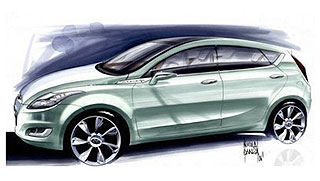
Hyundai i30

The Kia cee'd proved that although the Koreans might not know much about naming a car, they're certainly learning how to build one.

Slipstreaming the cee'd into the European market comes another Korean hatch, the Hyundai i30.

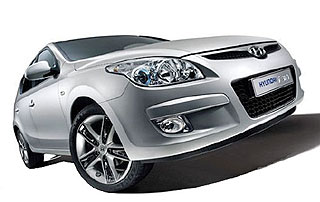
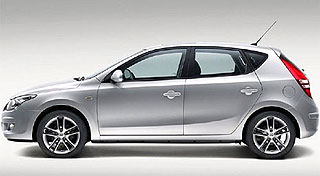
Hyundai i30Hyundai i30 2Hyundai i30 3Yes, it sounds like the answer to the question, 'How old are you, Tarzan?', but you'd better get used to it: Hyundai is planning to follow the i30 with an i10, i20, i40 and, yes, you guessed it, i60.

Aimed firmly at the Ford Focus, Renault Megane et al, the i30 promises a leap in quality over previous-generation Hyundais, as well as more Euro-friendly styling.

It looks pleasantly inoffensive, and there's plenty of kit on board, too. Standard spec includes aircon, alloy wheels, ESP and Hyundai's five-year, unlimited mileage warranty. Which is good, but not quite in the same league as the cee'd's seven-year bullet-proof guarantee.

There are three trims to pick from - Comfort, Style and Premium - and 1.4- and 1.6-litre petrol engines, as well as 1.6- and 2.0-litre turbodiesels.

With prices from the friendly side of 11 grand, the i30 could be a tempting little number when it arrives on these shores in September. Could it be better than the cee'd? We'll let you know as soon as we get our hands on one.

2009 Hyundai Genesis spy photos

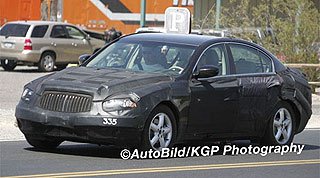
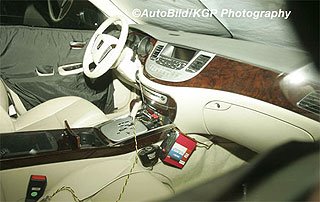
Hyundai has begun testing redesigned prototypes of its future luxury car that are similar in appearance to the Genesis concept car that debuted earlier this year at the 2007 New York Auto Show.

2009 Hyundai Genesis2009 Hyundai Genesis 2The latest prototype's grille is trapezoidal, instead of the former prototype's round-cornered rectangle, and the grille slats are no longer vertical, but horizontal like the original concept.

The new car's headlights are more pointed, and they stretch back along the fenders, again mimicking the shape of the Genesis showcar's lights. The prototype's front bumper has been toned down, with more conventional foglamps integrated with a rounded lower air intake.

Although the sedan's profile hasn't been altered since the first prototype, the latest version shows a shark-fin antenna mounted on the roof. Nine-spoke wheels are nearly identical to those used on the showcar.

Sunday, June 24, 2007

Hyundai i30 first coming to Europe

hyundai i30 first coming to europe

The newly unveiled i30 will be available in both European and US market, but firsts to benefit from the latest Hyundai station wagon will be the Europeans. The station wagon version is not the only one to come first in Europen; all the other versions of the car will come in Europe first starting late 2008.

The first i30 body style, a five-door hatchback, will be introduced in Europe this summer, but not be sold in the US. The hatchback is built in Korea now, but production of this body style with eventually shift to the Czech plant.

The i30 is an European exclusive model and will not be available in USA.

source: TopSpeed

Friday, May 11, 2007

2010 Hyundai Tiburon Captured

Spy photos of the 2010 Hyundai Tiburon have been leaked onto the Internet and are finding their way into Hyundai chat rooms. Sharing a rear-wheel-drive platform with Hyundai's new Genesis sedan that was unveiled in April as a concept at the New York auto show, the Tiburon is expected to go on sale in Korea in late 2008 and early-to-mid-2009 in North America.

 Hyundai Tiburon Hyundai Tiburon 2Hyundai TiburonSlightly bigger than the current Tiburon, this redesigned coupe takes many of its styling cues from the HCD-8 concept shown several years ago. Likely to share powertrains with the Genesis sedan, at least the DOHC V6 engine, Hyundai is focusing on the Infiniti G37 coupe as a chief competitor. The spy photos also reveal another engine possibility: a 2.0-liter turbocharged four-cylinder engine.

Pricing is expected to start in the high $20,000s.

Thursday, May 10, 2007

Spy Shots: 2009 Hyundai Tiburon Coupe

hcd87.jpg

Hyundai’s next generation Tiburon Coupe was recently caught undergoing the final phases of its development program before hitting the international auto show circuit next year. The new coupe is said to mimic some of the lines of the HCD8 Sports Tourer concept, which debuted at the 2004 Detroit Auto Show, but the latest images reveal some of the proportions of the current model will carry over.

The 09 Tiburon will ride on an all-new platform but the front-drive configuration is likely to stay, but with a range of more powerful four-cylinder and V6 engines. Hyundai is also rumored to be working on a new rear-wheel-drive coupe based on its upcoming Genesis sedan. Unlike the Tiburon, this new coupe would be a premium model aimed at luxury makes and is likely to feature a V8 powerplant.

Hyundai is well on its way to reaching its goal of becoming one of the top five car makes in the world. It’s no longer regarded purely as a maker of cheap and unreliable cars and is now comparable with many of its more established rivals. A recent survey has found that Hyundai’s image has improved dramatically in recent times, with the South Korean carmaker’s brand ranking improving by 32%, something that will definitely help the new Tiburon.

Click ahead to see the spy shots.

hyundai_coupe_5.jpgbk11_131.jpg

Via: Carscoop

Friday, April 20, 2007

2007 Hyundai Veloster Concept

(from Hyundai Press Release) Hyundai Unveils Trio of New Vehicles at 2007 Seoul Motor Show.

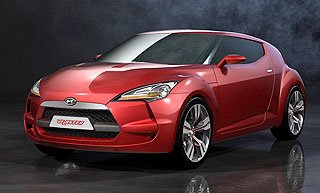
2007 Hyundai Veloster Concept2007 Hyundai Veloster Concept 22007 Hyundai Veloster Concept 32007 Hyundai Veloster Concept 4Seoul, Korea, 04/04/2007
Veloster sporty coupe concept targets Y-Gen

In a demonstration of its growing design and engineering capabilities, Hyundai Motor Co. unveiled three brand-new models at the 2007 Seoul Motor Show which opened at KINTEX today. Leading the trio was the Veloster, a sporty coupe which caters to the unique requirements of the Y-generation. Joining the sporty concept car were two production models: the TQ van, a thoroughly fresh interpretation of Hyundai's hugely successful H-1 van and the FD estate wagon, styled at the company's European Design Center in Russelsheim which marks Hyundai's long-awaited return to this popular segment.

Veloster

Styled at HyundaiÒ‘s Design and Technical Center at Namyang, the Veloster (codenamed HND-3) coupe is the third in a series of daring concept cars to be developed by the central styling studio in Korea.
The Veloster name, a compound of velocity and roadster evokes the sporty characteristics of a classic two-plus-two. A panoramic glass roof and other futuristic styling cues help project a high-tech image. Designed to cater to the tastes of the Y-generation, Veloster combines simple, iconic design with good value and robust construction.
"With Veloster, we wanted to try something really different. WeÒ‘re keenly aware that we need radically new products for the Y-generation, the first-time twenties something buyer," said Oh Suk-Geun, Hyundai's vice president of design. "This is really a bold new direction," he added.

Friday, April 6, 2007

Hyundai Veloster

SEOUL, S. Korea — The Hyundai Veloster is definitely not your conventional sport coupe.

Hyundai VelosterHyundai Veloster 2Unveiled at the annual motor show here, the Veloster concept (known internally as HCD-3) is an oddly styled two-door with 2+2 seating and a panoramic glass roof. The vehicle was styled at Hyundai's Design and Technical Center in Namyang, under the direction of Design Vice President Oh Suk-Geun.

The company says Veloster is aimed at Gen-Y buyers and "combines simple, iconic design with good value and robust construction."

Some styling cues from the Veloster could find their way into the next-generation Hyundai Tiburon.

Friday, March 30, 2007

First Drive: 2007 Hyundai Veracruz Limited


Previews

A Lexus-like seven-seat SUV that should continue to convert Hyundai skeptics.

Plop down into the driver’s seat of the Hyundai Veracruz, and you’ll find yourself in the middle of a quiet, comfortable, content-rich revelation. With a smooth, competent powertrain and luxury touches everywhere you look, it’s not hard to convince yourself that you’re behind the wheel of a Lexus. That’s hardly a shock, of course, given that Hyundai chose the Lexus RX350 as the benchmark for its seven-passenger Veracruz, which is now the largest SUV in Hyundai’s lineup.

A Smokin’ Deal

We tested an upscale front-wheel-drive Limited model, but all-wheel drive is available on any trim level for a $1700 premium. Ours was $33,120, with the only extra a set of floor mats for $125. Those luxury touches we mentioned? Mood lighting, heated leather seats, a six-CD Infinity stereo, a power liftgate, a sunroof, and auto-dimming rearview and side mirrors are all standard. Granted, many of those items are optional on lesser trim levels, but even the base Veracruz includes second-row climate controls, satellite radio, six airbags, and defroster-equipped side mirrors for $26,995, $100 less than an entry-level Honda Pilot and $500 or so less than a similarly outfitted Toyota Highlander. (A base Highlander costs some $1500 less than a Veracruz but doesn’t include a V-6 or third-row seating.) Should you feel particularly self-indulgent, available packages will add anything from a rear-seat DVD entertainment system to an upgraded, 605-watt stereo to power-adjustable pedals to hands-free keyless entry.

Refined and Smooth: Hyundai Hallmarks?

A 3.8-liter, 24-valve V-6 is the only engine for the Veracruz, no matter which trim level you choose—GLS, SE, or Limited. Its 260 horsepower provides acceleration that we can’t call particularly fast or ridiculously slow. Figure on about eight seconds for the 0-to-60-mph benchmark. But power delivery is very linear, and there’s a respectable 257 pound-feet of torque. The big Hyundai is quiet, too. Very little engine noise makes it into the cabin, and at idle, the Veracruz is so quiet and vibration-free that, if you’re like us, you’ll need to double-check that you’ve twisted the key before slipping into gear. Fuel-economy ratings are 18 mpg city and 25 mpg highway, on par with the Pilot and Highlander. As refined as the V-6 is, the best part of the drivetrain is perhaps the Aisin-sourced six-speed automatic, Hyundai’s first. Upshifts are hiccup-free and quick, and the box operates so seamlessly, you hardly know it’s there. There’s a manumatic shifting feature, although tipping the lever toward the passenger side to activate it rather than toward the driver seems backward.

The strut-front and multilink-rear suspension delivers a plush, comfortable ride, especially on the freeway, and we found body control to be exemplary. Sure, there’s some lean when you pitch the Veracruz into a corner with any aggression, but it’s taken care of so quickly that you hardly care. This is certainly no bobbing oceanliner, and there’s little of the rear-end wiggle that usually accompanies soft-riding vehicles with a high center of gravity. The steering has luxury-grade heft but unfortunately is as dead as Orson Welles; you’d be better off looking for feedback from a room full of mimes than from this rack. The brakes are nothing special, although at least there’s no dead zone in initial pedal travel—when you call on the brakes, you get brakes.


Rolling In Style

The cabin of the Veracruz is beautifully trimmed using top-shelf materials, and the buttons and the switchgear are all relatively substantial. Fit and finish is excellent, but we will admit to finding a few ergonomic mistakes. Besides the foot-operated parking brake, which is positioned to rip out chunks of shin at will, the ashtray takes up far too much of the center console and the seats—all seven of them—could use longer bottom cushions. This is not to say, however, that inside a Veracruz isn’t a good place to be. Despite the too-short cushions, the seats are comfy enough for long trips, and we appreciate the iPod hookup, which is neatly located behind a flip-down door on the dash. Hyundai even thoughtfully provides a short 1/8-inch-to-1/8-inch connection cable and a spot to stash it.

Second-row passengers ride on a sliding and reclining 60/40-split bench, and it’s nearly as comfortable as the front row. Getting into and out of the two-person third row is a simple task, with only one hand required to move the middle row out of the way. Average-size folks will be relatively comfortable back there even with the middle seats pushed all the way back in their travel; unfortunately, you sit so low and the windows are so high that you feel like you’ve fallen into a hole. The cargo area features a shallow, snap-shut bin under the floor, but there’s scant room to be had until you fold the third row. Once those seats are flat, though, the cargo area will hold 40 cubic feet of stuff.

Boring—but It Won't Matter

The Veracruz is quite good, and its interior is astonishingly well-appointed, but an unfortunate side effect of Hyundai’s devotion to the Toyota/Lexus creed is that the Veracruz is also unmistakably boring. It’s not as fun to drive as even the Pilot, never mind something more sporting like the Mazda CX-9. So there’s little about this new Hyundai that will attract enthusiasts, but with its low price and loads of standard equipment, the Veracruz shouldn’t fail to find plenty of buyers. And besides, being boring hasn’t really held back a certain goliath from Japan, has it?

BY ERIK JOHNSON
caranddriver.com

Wednesday, March 28, 2007

Hyundai Tucson Xenith Limited Edition

As spring approaches Hyundai has added a new luxury special edition to its highly successful Tucson SUV range. The Tucson CDX already features a high level of standard equipment, such as; full leather interior, heated front seats, ABS with EBD, remote locking with alarm and air conditioning with climate control, to name a few.

The Hyundai Tucson Xenith is available in black or silver and is a 6-speed, 2.0 CRTD (Common rail turbo diesel) 4WD manual. The Tucson Xenith includes all the specification of the best-selling Tucson CDX model plus more than £3000 of added specification upgrades.

The New Hyundai Tucson Xenith includes:

  • Colour coded side mouldings and bumpers
  • Rear privacy glass
  • Two tone leather and Alcantara upholstery
  • Alcantara covered instrument cluster surround, gear gaiter, steering wheel, handbrake, armrest, door pull linings and door inserts
  • Birds eye black maple wood effect trim on dashboard, console and door pulls
  • Leather and alloy sports gear knob
  • Luxury stainless steel embossed door entry guards
  • Aluminium sports pedal trims
  • 19” multi spoke alloy wheels with polished rims

Priced at £20,670 OTR this highly equipped model is in the showrooms now with the remit to provide customers with class leading value and exceptional specification.

As with all Hyundai vehicles a comprehensive support package goes hand in hand with any new purchase from the range. The package includes three-years’ RAC assistance cover, six year anti-perforation warranty and the industry leading, range-wide, five year unlimited mileage warranty.

Tuesday, March 27, 2007

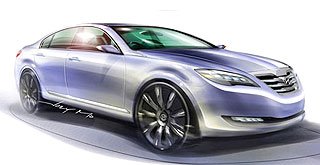
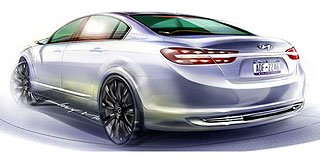
Hyundai Reveals Concept Genesis Ahead Of NY Debut

hyundai-cg-001.jpg

Hyundai has just let loose with some advanced images and details of its big New York debut, the Concept Genesis.

A near-production rear-drive large sedan concept, the Genesis looks to extend the brand’s upward trajectory to an even higher pricepoint. Powered by the company’s new Tau 4.6-liter DOHC 32-valve V-8, the company promises that when a production version of the Genesis hits in 2008, it will start at “well under $30,000.”

Hyundai says the CG has a 53:47 weight distribution, and is 12-to-14 percent stiffer in torsional rigidity than a BMW 5-series or Mercedes-Benz E-class, all while being lower in weight. Mounted to it is a six-speed ZF automatic gearbox, complete with manual shifting inputs. So-equipped, Hyundai says the 300+ horsepower V-8 Genesis will run to 60 miles-per-hour in “well under” six seconds.

hyundai-cg-002.jpghyundai-cg-003.jpghyundai-cg-004.jpg

HYUNDAI TO UNVEIL CONCEPT GENESIS PREMIUM SPORTS SEDAN

Rear-Wheel Drive and V-8 Engine Promise World Class Dynamics and Refinement
FOUNTAIN VALLEY, Calif., March 26, 2007 / PRNewswire / – Hyundai will present the world debut of Concept Genesis during a press conference at the New York International Auto Show on April 4. The concept car heralds the future architecture and design of a rear-wheel drive premium sports sedan scheduled to grace the Hyundai lineup in 2008.
“Concept Genesis extends our product range into new territories from a performance, design and packaging perspective,” said Steve Wilhite, chief operating officer, Hyundai Motor America. “When it arrives in 2008 it will catapult Hyundai into competition against some potent rivals, and Genesis is up for the challenge.”

Concept Genesis rides on a prototype of Hyundai’s all-new rear-wheel drive platform, signaling the brand’s desire to broaden its appeal to discerning driving enthusiasts. Concept Genesis is powered by Hyundai’s newly developed Tau DOHC 32-valve V-8 powertrain. Concept Genesis marks the beginning of premium performance for the Hyundai brand.

“Concept Genesis is a manifestation of Hyundai’s extraordinary desire to deliver world-class products across all model segments,” said John Krafcik, vice president, Product Development and Strategic Planning, Hyundai Motor America. “With Genesis, we’ve got a unique product position — an all-new, highly capable, rear-wheel drive platform; a high-performance powertrain; and premium, progressive design - all at a price starting well under $30,000.”

NEW REAR-WHEEL-DRIVE ARCHITECTURE IS A FIRST FOR THE U.S.

Concept Genesis features a rear-wheel-drive architecture, its first application in a U.S. Hyundai model. Rear-wheel drive provides a 53:47 front/rear weight distribution for optimal handling as well as more refined steering characteristics. Concept Genesis’ premium handling and steering performance is further controlled by Electronic Stability Control (ESC), the industry’s most important new safety technology. Hyundai leads all popular car brands in the standard application of ESC, with more than 70 percent of 2007 Hyundai sales volume featuring this life-saving technology as standard equipment. ESC continually analyzes road speed, steering input, throttle position, lateral yaw rate and other factors. An onboard microprocessor determines if the vehicle is starting to understeer or oversteer, and can brake appropriate wheels and reduce engine power to keep the vehicle safely on course.

Utilizing ultra high-tensile steel in critical areas in the unibody provides Concept Genesis with a 12-14 percent higher dynamic torsional rigidity and a lower body-in-white weight than the BMW 5-series and Mercedes-Benz E-Class. This stiffer, lighter, larger body provides a terrific foundation for world-class dynamics and lowering noise levels inside the vehicle.

TAU V-8 POWERTRAIN

Adding to the Concept Genesis’ performance factor is the all-new Tau 4.6-liter V8 engine mated to a ZF 6-speed automatic transmission with SHIFTRONIC® manual control and a limited-slip differential. The Tau delivers well over 300 horsepower to fit the demands of performance-oriented consumers. This powertrain combination will launch Genesis to 60 miles per hour in well under six seconds. The Tau engine is built with flexibility for the future. Future Tau variants may offer larger displacement, forced induction options and other technology enhancements.

INNOVATIVE AND SOPHISTICATED SPORT-TUNED SUSPENSION

Genesis features a suspension design that is among the most sophisticated and refined anywhere, at any price. The front five-link suspension features upper and lower arms linking the front wheels to the chassis. This artfully articulated arrangement creates a virtual king pin axis which dramatically reduces unwanted kickback through the steering wheel as well as improving responsiveness. The five-link independent rear suspension is equally sophisticated, enabling precise suspension geometry for an incredible level of ride and handling prowess. The capabilities of the advanced front and rear-suspension are maximized through driver selectable dynamic settings allowing tailored ride and handling characteristics according to need … or desire.

MODERN DESIGN

Genesis’ design is a progressive interpretation of the modern rear-wheel drive sports sedan. To match its dynamic powertrain capabilities, Genesis combines strong, sculpted forms which integrate precise details, natural materials and innovative lighting to provide a well-crafted, premium design aesthetic.

SAFETY FEATURES

Maintaining Hyundai’s emphasis on delivering leading safety technology, Concept Genesis boasts world class active and passive safety features to both prevent accidents, and maximize the well being of its occupants in the event of a collision. The Genesis continues the Hyundai tradition of standardizing key life-saving active safety technology such as Electronic Stability Control (ESC) with traction control, eight airbags and active headrests.
Concept Genesis is brought to a halt by large four-wheel anti-lock disc brakes with Brake Assist and Electronic Brake Distribution (EBD). The 12.6-inch front rotors have single-piston floating calipers and the rear brakes feature 12.4-inch rotors with single-pistons.

TECHNOLOGY

• Advanced adaptive cruise control • Navigation with backup camera
• Electronic Stability Control • Electric parking brake
• Eight airbags • Bluetooth technology
• Heat / cool seats • USB / Auxiliary input jack
• High Intensity Discharge (HID) headlamps with adaptive leveling • HD Radio™ Receiver
• Push-button start • XM Satellite Radio®
• Infinity® Discrete Surround Audio System
GENESIS PREMIUM SPORTS SEDAN SPECIFICATIONS
• Configuration: FR Engine RWD Sport Sedan • Top speed: 130 mph (restricted)
• Wheelbase: 2935 mm / 115.6 inches • Recommended fuel: Unleaded
• Overall length: 5005 mm / 197.0 inches • Transmission type: ZF 6-speed automatic with SHIFTRONIC manual control
• Overall width: 1863 mm / 73.3 inches • Suspension: Front multi-link (5-link) / Rear
multi-link (5-link)
• Overall height: 1490 mm / 58.7 inches • Stabilizer bar (front/rear): 26 mm/18 mm
• Track, f/r: 1575 mm / 62.0 inches, 1580 mm / 62.2 inches • Weight distribution front to rear: 53:47
• Wheels: 20-inch multi-spoke • Brakes: Power-assisted 4-wheel disc
• Engine type: V8 • Front brake diameter (mm / in): 320 / 12.6 ventilated disc
• Estimated horsepower: Well over 300HP • Rear brake diameter (mm / in): 314 / 12.4 solid disc
• Estimated torque: Over 300 lb. ft • Steering type: Speed-sensing rack-and-pinion
• Displacement: 4,627 cc • Steering ratio: 14.86
• Block material: High pressure die casting aluminum block
• Cylinder head material: Aluminum
• Valvetrain: Dual Over Head Cam (DOHC)
• Valve timing: Continuous variable valve timing
• Variable induction system
• Fuel delivery: Multi-port fuel injection
• Bore & stroke: 92 x 87
• Estimated 0-60 mph: well under 6.0 seconds

Hyundai Motor America, headquartered in Fountain Valley, Calif., is a subsidiary of Hyundai Motor Co. of Korea. Hyundai vehicles are distributed throughout the United States by Hyundai Motor America and are sold and serviced through more than 750 dealerships nationwide.

source: windingroad.com

Monday, March 19, 2007

Hyundai Adds an Under-$25,000 Model to Azera Lineup

FOUNTAIN VALLEY, Calif. — In a bid to retain its image as one of the value leaders in the industry, Hyundai on Thursday rolled out a new bottom-of-the-line model for its Azera lineup. The Azera GLS carries a $24,895 sticker price, including a $660 destination charge, and features a 234-horsepower 3.3-liter DOHC V6. The Azera SE and Limited models are equipped with the 263-hp 3.8-liter DOHC V6.

Hyundai AzeraThe GLS is outfitted with a five-speed automatic transmission, like the SE and Limited models. It also gets standard electronic stability control with traction control, eight airbags, a six-speaker AM/FM/XM/CD audio system and power front seats. A power sunroof adds another $950 to the bottom line.

The Korean automaker has also boosted the price of the midrange Azera SE model by $800. The SE now comes with standard 17-inch wheels. The new price is $26,195, including a $660 shipping charge. The price of the top-of-the-line Azera Limited is unchanged at $27,995, including shipping.

Wednesday, March 14, 2007

2007 Hyundai QuarmaQ: more photos

(from Hyundai Press Release) Hyundai and GE Plastics Unveil QarmaQ Advanced Technology Demonstration Vehicle at 77th Geneva International Motor Show
- Sporty Crossover Coupe makes debut in Europe
- Elastic Front™ safety system reduces pedestrian injury
- Eco-focused technologies lower weight, fuel consumption and CO2

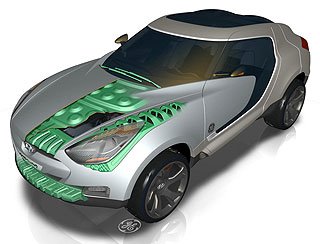
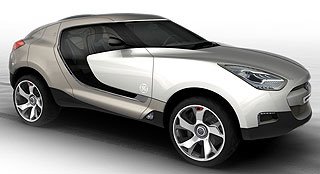
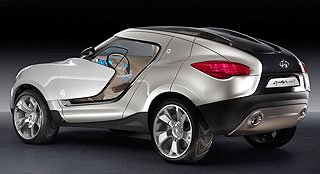
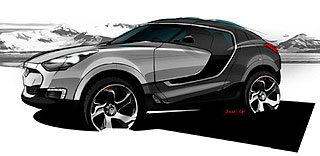
2007 Hyundai QuarmaQ2007 Hyundai QuarmaQ 22007 Hyundai QuarmaQ 32007 Hyundai QuarmaQ 42007 Hyundai QuarmaQ 5At the Geneva International Motor Show today, Hyundai Motor Co. and GE Plastics presented QarmaQ, a first in the Crossover Coupe segment. QarmaQ is Hyundai's Advanced Technology Demonstration Vehicle (ATDV) that showcases over 30 different environmentally progressive technologies led by the innovative “Elastic Front™”, an innovative solution that can help reduce the risk of severe injuries in Crossover Utility Vehicles (CUV) pedestrian collisions.

Designed at Hyundai Motor Europe's Design and Technical Center in Russelsheim and engineered in close cooperation with GE Plastics, QarmaQ develops and validates over 30 key technologies, which will be selectively incorporated into Hyundai’s new models to be rolled out from 2008-2014.

“At Hyundai, we believe in innovation for humanity, and QarmaQ demonstrates our commitment to safety innovation and our determination to bring more environmentally responsible technologies to the market,” said Dr. Kwon Moon-Shik, Hyundai Motor's vice president of advanced technology. “We chose to partner with GE Plastics because of their commitment to the environment and their wide range of innovative materials and technical capabilities. Technologies from QarmaQ will provide Hyundai owners with a safer, more environmentally responsible car and a better driving experience.”

QarmaQ is lighter, stronger and more economical than any current production CUV in its class. It also offers significant recycling advantages both in construction and eventual disassembly. In short, it is a viable and realistic glimpse of the future potential of personal automotive transport.

Pedestrian Safety

The issue of pedestrian safety is a growing one. In the EU, one-fifth of all traffic fatalities – 7,000 people per year – are pedestrians hit by a vehicle. In densely populated Korea, the rate is as high as 39 percent. QarmaQ's Elastic Front™ safety system, which encompasses the whole front end of the vehicle, is arguably the world's first global pedestrian protection solution on a CUV. Three energy-absorbing structures are fully integrated underneath the futuristic styling of QarmaQ and this system takes advantage of several advanced materials that offer inherent energy absorbing properties. QarmaQ's body panels have been designed to work in concert with energy-absorbing systems on the underside of these panels to manage and dissipate the force of a pedestrian/CUV collision. The Elastic Front™ has been engineered to meet EEVC WG17 Phase2, Euro NCAP, and JNCA pedestrian impact requirements and is currently undergoing testing for final validation.

A totally relevant concept

The Hyundai QarmaQ concept car is the result of the fusion of exceptional expertise and engineering foresight from Hyundai and GE Plastics. More than a design concept, QarmaQ illustrates that environmentally responsible solutions can be elegantly incorporated to enhance safety, design and performance.

"GE Plastics is committed to developing greener, lighter and aesthetically pleasing solutions to support our customers in creating vehicles with reduced environmental impact," said Gregory A. Adams, vice president and general manager, GE Plastics – Automotive. "We are delighted to have collaborated with Hyundai and we believe that working together we helped them develop an exciting new CUV that demonstrates greater environmental responsibility as well as improved safety, dramatic design, and high performance."

Firmly positioned as a crossover Coupe/CUV, the QarmaQ derives its name from traditional Inuit dwellings, constructed from earth, whalebone and animal skins. Like them, QarmaQ challenges conventional ideas on construction methods and materials. Also in common with the original structures, it boasts unusual strength, resilience and protection.

By combining leading edge design, advanced engineering techniques and the benefits of GE materials technology, the QarmaQ demonstrates the ability to meet necessary, but problematic areas of legislation dealing with pedestrian safety and eco-responsibility.

The choice of a crossover coupe/CUV format for QarmaQ underlines the commitment of Hyundai to design innovation in this market sector. With Santa Fe, Tucson, and Veracruz, Hyundai created pioneering vehicles.

This 2+2 vehicle targets the important empty next baby boomers demographic, who are rediscovering a new-found freedom while remaining the wealthiest demographic in history. Today, this key group of consumers is beginning to spend their nest egg and enjoy the fruits of their labour, not on material possessions, but on experiences. QarmaQ soulfully blends the driving experience of a Coupe with the ability to manage multi-terrain driving of a CUV, providing empty nesters with effortless access to their outdoor playground.

Design: Freedom of shape

As a joint project with GE Plastics, QarmaQ endowed designers with greater expressive freedom to create complex three-dimensional shapes that could not have been achieved with conventional production methods and materials such as metal and glass.

"The powerful profile and stance of the design incorporates dynamic, sculptural qualities and elegant sportiness on one hand, with smooth refined surfaces on the other," said Thomas BÑŒrkle, chief designer, Hyundai Motor Europe. "Moreover, the various properties of the GE materials allowed more freedom in meeting or even exceeding safety requirements. The result is a uniquely balanced and harmonic design both inside and out," he added.

Departing from conventional car design that combines a lower body and a glass cabin on top, QarmaQ blazes a new trail with panoramic wrap-around glazing area using GE’s Lexan™ polycarbonate resin. This part sits between the two pronounced “muscles” above the front and rear wheels. The C-shaped side window enables innovative helicopter-like downward visibility and is a key design feature demonstrating the new glazing technology.

Exterior: Fluidity of line

Connected by unique glazed surfaces, the exterior design relates strongly to, and interacts effortlessly with the interior. The unique division between the solid bodywork and transparent glazed areas creates a new perspective, whether viewed from inside or from the pedestrian standpoint.

The exterior contours and fluidity of line have been refined to give an immediate impression of movement frozen in motion. This aesthetic is mirrored in the interior, so that the fusion and merging of the perceptual boundaries between inside and out delivers a feeling of integration and synchronization to the overall appearance.

Although QarmaQ does not have a high waistline or small window area (conventional methods to convey a feeling of protection), the exterior design still communicates a commanding presence and a feeling of protection to the occupants.

"The QarmaQ’s exterior design communicates a commanding presence and a feeling of protection to the occupants,” said Robert Butterfield, global market director, GE Plastics. “ The twin domes on the sunroof, facilitated by the new glazing technology, increases the inner space for the rear passengers and creates a unique design feature.” The wrap-around windscreen, in combination with the elongated bonnet delivers dramatic, almost classic, proportions and gives the car a unique sporty feeling. Finally, the contrast of the strong dark coloured areas to the lighter tonal areas emphasizes QarmaQ’s off-road DNA.

Interior

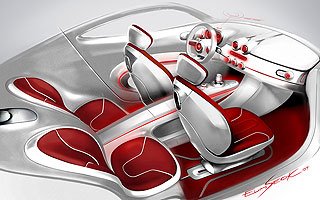
In response to shrinking family sizes and emergent customer preferences, QarmaQ is specifically designed to carry four people in above average comfort. The extensive use of new materials and techniques has resulted in a more fluid, more unified interior, by allowing seamless integration of otherwise intrusive elements.

As the sporting exterior proportions suggest, the QarmaQ is primarily a driver’s car. Within its unique interior architecture the cockpit is isolated in an active, yet protective pod structure. This helps promote a sensorial and highly self-indulgent driving experience.

One of the main aims of the interior design was to develop a practical and interactive space, which wraps around the occupants. The driver-oriented cockpit, which combines functionality with organic sculpted shapes, creates an attractive, fun-to-drive atmosphere. This is further underlined by:

• Inclusion of smooth surfaces embedded with discrete or hidden touch activated sensors
• “Floating” elements pulsating and glowing with tinted ambient lighting

The interior is brought alive by a variety of technologies, effects and surfaces, including:
• Thoughtful ambient LED lighting by Lumination, LLC glows through ceramic components
• Silicone applied next to leather, to give a pleasing tactile and visual experience

The colour harmony of the interior has been designed to enhance the feeling of serenity and spaciousness, which in turn relates directly to the high level of comfort enjoyed by the passengers. The mixed effects, textures and colours add sophistication to the dynamic forms and strong presence of the car. Functional elements made from aluminium emphasise the more technical aspects, contrasting with and highlighting the softness of the interior materials.

New materials, new directions in comfort and safety

Current composite technology is usually thought too expensive and too difficult to fabricate to be of use anywhere but the aerospace and motor racing industries. The QarmaQ is physical proof that this need not be so.

The wrap-around GE Lexan™ windscreen and extensive use of GE polycarbonate glazing materials provides a weight saving of up to 50 percent in relation to glass, while simultaneously allowing more adventurous shapes than flat glass. The glazing features a unique technology from Exatec™ which deposits a thin protective layer of glass on the Lexan™ to add protection from scratching and the effects of weathering.

QarmaQ also introduces new curved and moving side glazing in Lexan. As well as allowing such advanced applications, the impact resistance and other properties of this material also helps increase both occupant and pedestrian safety.

Exatec™ infrared coatings on the whole transparent areas reflect heat, helping cool the interior and reducing the power demands upon the infrared regulated air conditioning. Lighting is achieved by incorporating mood illumination into the actual material, delivering a unique interior ambience. The material also facilitates a perfectly flat, fully integrated fractal radio antenna within the roof structure.

Among other milestones in the construction of QarmaQ, the front wings were designed from the beginning to be one very large single injection moulded component. Together with the deformable bonnet and precise bumper mouldings, these also form a major addition to pedestrian impact safety. The sophistication of the material and manufacturing technique also played a major part in the ability to fully encapsulate the complex headlight shape into the whole frontal styling.

At the other end, the tailgate breaks new ground by bonding different materials, including the glazing and rear light assemblies, to create a one-piece component structure. This increases the integral strength, while at the same time simplifying vehicle assembly and reducing weight.

Another major safety advance is the use of sensors to detect vehicle presence in the blind spots of the rear view mirrors when pulling out or overtaking, and audio-visually alert the driver.

Euro5 diesel engine

QarmaQ's 2-liter diesel engine is fully compliant with EURO5 emission regulations. It features the very latest technologies such as high pressure fuel injection and fine fuel spray atomization for higher torque and better power output. Regulated emissions such as CO, THC, NOx and PM, were reduced drastically while a Catalyzed Particulate Filter system, CPF, is capable of cleaning about 90 percent of the particulate matter from the diesel emissions. Furthermore, by switching the position of CPF from the under-floor area to a location more closely coupled to the exhaust manifold, it was possible to minimize the catalytic light-off time and to enhance the naturally regenerative characteristics of the CPF.

A greener future

Thanks to extensive use of advanced materials, QarmaQ is 60 kg lighter than a comparable vehicle made with traditional materials.

GreenOrder, an environmental strategy firm based in New York, N.Y. that audited the Qarmaq estimated that the 60 kg. that have been taken out of the Qarmaq, means the vehicle would require about 80 fewer litres of diesel per year, and would cut annual greenhouse gas emissions by more than 200 kg. Furthermore, if every new vehicle registered in the European Union (EU-15) in 2006 had reduced fuel consumption by the same amount, the result would have been an annual savings of more than 7.4 million barrels of diesel fuel -- or enough to sustain the European Union (EU-15) diesel demand for three days.
As a result, the greenhouse gas savings would equal approximately 3.1 million metric tons of carbon dioxide. According to Joseph Malcoun, an Associate with GreenOrder, cutting edge material technologies are expected to make a major contribution to increasing the fuel economy of tomorrow’s passenger vehicles. “As consumer demand for more fuel efficient vehicles continues to grow, we expect the use of advanced materials to play an increasing role in reducing the greenhouse gas footprint of the cars we drive.”

HPPC composites for horizontal body panels significantly reduce part weight - up to 50 percent per part - while maintaining strength equal to that of steel. This lighter-weight cladding contributes to better fuel efficiency and improved power-to-weight ratio for drivers and its energy absorbing qualities are harnessed to create the Elastic Front™ safety system.

QarmaQ's body panels use an environmental responsible plastic, Xenoy iQ™ and Valox iQ developed as part of GEs ecomagination™ initiative to address three critical environmental concerns: conserving energy, lowering greenhouse gas emissions, and up-cycling or re-using materials such as PET plastic bottles. QarmaQ re -uses approximately 900 PET bottles that would otherwise become landfill.

Another environmentally progressive aspect of the QarmaQ’s design is the use of GE paint replacement technologies, including Visualfx™ resins with Lexan™ films, to replace painting operations that can release toxic and greenhouse gases.

To eliminate dependency on PVC in the wiring, GE’s Noryl™ resin technology was used for wire and cable coating. Replacing PVC, these ultra-thin coatings can reduce cable weight by up to 25 percent.

source: seriouswheels

Tuesday, March 13, 2007

Hyundai To Unveil New Luxury Sedan Concept

FOUNTAIN VALLEY, Calif. — Hyundai Motor America announced today that it will unveil the Concept Genesis at the 2007 New York Auto Show. According to the company, the new concept sedan points the way toward a future premium rear-wheel-drive sedan.
Hyundai New Luxury Sedan Genesis ConceptHyundai New Luxury Sedan Genesis Concept 2Hyundai New Luxury Sedan Genesis Concept 3Hyundai New Luxury Sedan Genesis Concept 4Hyundai's rapid rise in the U.S. market has led the Korean company to commission a new luxury sedan that will slot above the current Azera flagship. Although no additional details about the Concept Genesis were released, the existence of this premium sedan has been no secret.

Various prototypes have been caught testing over the past year, each one revealing a little more about this new Hyundai that's expected to cost roughly $30K-$35K. It rides on a 116-inch wheelbase, which puts it in the same league as the Audi A8 and BMW 7 Series in terms of size.

Although a V8 engine was rumored to be in the works, a prototype caught with its hood open revealed a V6 driving the rear wheels.

The interior features broad swaths of wood trim on the dash and center console. Leather trim covers nearly everything else. The backseat appears to offer generous legroom on par with anything short of a Lincoln Town Car.

Saturday, March 10, 2007

2007 Hyundai Veracruz pricing

FOUNTAIN VALLEY, Calif. — Hyundai Motor America has announced that its new seven-passenger Veracruz crossover vehicle will range in price from $26,995 for the base GLS model to $34,695 for the top-of-the-line Veracruz Limited with all-wheel drive. Prices include a $690 destination charge.

 2007 Hyundai VeracruzIn a statement, the Korean automaker noted that the Veracruz "has a base price more than $11,000 lower than the [2008] Lexus RX 350." The RX 350 starts at $38,115, including a $715 shipping charge. The two compete fairly head to head in powertrain terms: The Veracruz is equipped with a 3.8-liter V6 that makes 260 horsepower and 257 pound-feet of torque, mated to a six-speed automatic transmission. The RX 350 is equipped with a 270-hp 3.5-liter V6 that delivers 251 lb-ft of torque. It is mated to a five-speed automatic transmission.

However, careful shoppers will note that the base 2007 Chrysler Pacifica, also a Veracruz competitor, slots in at $25,190, including a $730 destination charge. That is $1,805 cheaper than the Veracruz. In addition, the 2007 Toyota Highlander starts at $25,525, including a $645 destination charge or $1,470 cheaper than Veracruz.

The Veracruz comes in three trim levels: GLS, SE and Limited. All models include stability control.

Thursday, March 8, 2007

Geneva Motor Show: Hyundai QarmaQ Concept

PRESS RELEASE:

Advanced Technology Inside and Out: Hyundai ATDV Features Innovative Applications Utilizing GE Materials


At the Geneva Motor Show here, GE Plastics' high-performance composites and thermoplastics is taking the spotlight with close to 30 diverse applications for Hyundai's advanced technology development vehicle (ATDV), the QarmaQ. The crossover utility vehicle (CUV) is a joint project of GE Plastics and Hyundai to demonstrate the design freedom and practicality of using plastics in components traditionally manufactured from metal, glass, and thermosets. It features GE's advanced technologies in five key areas: the Elastic Front*, exterior, interior, lighting systems, and underhood.

Among the benefits of the GE Plastics materials are a weight reduction of up to 60 kg that can offer an average fuel savings of up to 80 litres/year; improved pedestrian safety; and the ability to create complex, 3D shapes.

Environmental Benefits

The QarmaQ showcases the significant environmental advantages of using plastics. For example, Xenoy iQ* and Valox iQ* resins composites – both GE ecomagination* products – are derived from 85 percent post-consumer plastic waste. The materials are used on key parts of the vehicle and helped divert close to 900 polyethylene terephthalate (PET) plastic bottles from potential landfill. Paint-free solutions used for the vehicle's interior help to reduce volatile emissions given off during traditional painting operations. GE's Flexible Noryl* resin enables thinner wire and cable coatings that help reduce vehicle weight and allow more electronics in the same space.


GE Plastics materials are also used in the following applications:

Elastic Front
A unique pedestrian safety development that requires no airbags or mechanical pop-up hydraulics; it uses the inherent properties of GE's materials.

Energy-absorbing structures and the natural properties of GE's plastics are seamlessly integrated into the futuristic styling of QarmaQ. Different impact zones on the car correlate to the various areas of a pedestrian's body likely to be contacted in a collision.

- Lower leg protection
• Global Energy Absorber: Using Xenoy iQ resin, GE Plastics has developed a single design for energy-absorbing countermeasures that meet FMVSS/CMVSS, and European and Japanese Pedestrian Phase I and II requirements. The part combines two functions: it is soft and supple enough to absorb the energy when the lower leg of a pedestrian is contacted, but stiff enough in a situation where the driver may drive into a barrier or object at low speed.

- Upper leg protection
• Bumper: Due to the higher hood of a CUV, absorbing energy in the area around the junction of the top of the grill/bumper and front of the hood is critical, as it potentially will impact the hip area of a pedestrian. The physical properties (modulus and ductility) of the new Xenoy iQ* HMD resins make it possible without extra complicated structures or mechanical solutions.

• Hood: Using developmental composite HPPC material technology – GE's Xenoy iQ resins - the lightweight hood provides energy absorption via design and material properties. The HPPC thermoplastic sandwich composite material offers a solution close to half the weight of traditional materials, which can help reduce injuries in a crash.

- Head impact zone
• Front fenders: Large injection-molded, vertical wraparound fenders using GE's Xenoy iQ HMD resins make their debut on the QarmaQ in Geneva. Because the top area of the fenders also form part of the horizontal hood surface at the front of the car, they must be capable of absorbing impact resulting from a collision with a pedestrian's head. Equally important, HMD technology enables large automotive molding to be implemented while meeting tough OEM requirements for dimensional tolerance on gaps and flushness. Due to its unique nanotechnology fibrillation, HMD Xenoy resins can also help improve dimensional stiffness of the large body panel components.


• Hood: The horizontal surface of the HPPC hood made with Xenoy iQ resins contribute important energy management aspects to this critical zone for head impact. In addition to its crash management properties, HPPC is unique because it offers a tough, durable, but flexible and lightweight alternative to traditional metals.

Exterior

Larger areas and wraparound designs take Lexan* high-tech transparent plastic resin glazing to a new level with noteworthy weight savings of up to 29 kgs on the QarmaQ.

• Movable side glazing: Giving customers an all-around open-air experience, Lexan side glazing uses the Exatec* 900 system that provides an abrasion-resistant and weatherable PECVD (plasma-enhanced chemical vapour deposition) glass-like layer on the surface of the molded Lexan* glazing. Using two-component molding, the inherent ability of Lexan to integrate seals and mechanical functions within the glazing component eliminates traditional unsightly seals and mechanical fastenings to produce a seamless flush window.

• Integrated panoramic sunroof /fractal antenna: The Lexan polycarbonate (PC) panoramic sunroof with UV-blocking technology is designed to be a complete module, providing everything from lighting to telemetry. Manufactured with a Fractal Antenna® Design from Exatec and FICOSA, together with GE's Lexan glazing, the system can be used as a telematic platform for multi-band antenna integration. Additional opportunities include using Exatec 900el electroluminescent interior light band for an improved interior ambiance.

• Doors: Delivering up to 50 percent weight reduction compared to metals, doors made with GE's HMD Xenoy iQ resins are dramatically sculpted to accommodate all passenger sizes while maintaining design, strength, and practicality.

• Integrated lift gate: Designed as a working sub-assembly, the rear lighting, wiring, sensors, and all the necessary electronics are integrated into the lift gate. The dramatically shaped glazing demonstrated on the system is made from Lexan PC featuring the same Exatec900* coating technology demonstrated on the side windows. This lightweight component can meet the regulatory requirements for driver visibility as well as enable the use of a wiper and defroster technology from Exatec.

• Precision trunk glazing: GE's Lexan glazing offers signature surfaces and back vision for the driver without compromising performance and safety.


• Mirrors: Clear visibility in the mirrors (de-misting and defrosting) is monitored and controlled with the use of GE's sensing technology and a new thermoelectrically conductive plastic resin from GE Plastics called Statkon* resin.

Interior

• Displays and instrumentation: GE's Illuminex* optical display film uses a "coating-free" diffuser technology to meet demanding optical requirements in the liquid crystal display (LCD) back lighting industry.

• Doors: Fabric-covered upper door trim parts are back-molded with Cycoloy* CY8540 resin, which allows the fabric to be processed without being stretched and damaged.

• Instrument cluster, dashboard, and door trim: Beautiful 'Alpine white' Lexan Visualfx* special effects resin with a layer of crystal-clear Lexan resin molded over the top provides depth and super-high gloss.

• Integrated airbag door: Lexan EXL resin enabled an innovative design that seamlessly integrates the airbag door into the fabric-covered instrument panel for outstanding aesthetics and improved safety via fragment-free airbag deployment, even at -40 C.

• Pillar trims: Lexan EXL 1414H resin fulfills even cold impact demands, and is an excellent candidate for designs with airbags behind the pillar trim.

• Seat backs/center console: Designed in deep gloss 'Ceramic' white, new anti-static Geloy* XTW resin provides a high level of weatherability and UV resistance. Because the plastic is infused with pigment, the use of paint is reduced.

• Vents and switches: Lexan Visualfx special effects resin's light transmission properties are harnessed to transform the vents and switches in the interior into illuminated jewel-like details.

Lighting System

• Front lenses: Molding these parts with clear, high-heat Lexan XHT resins enabled a more compact package without compromising optical performance.

• Headlamps: Debuting on the QarmaQ, GE's Nightfx* resins are water-clear materials that glow in brilliant colours when exposed to certain wavelengths of light. Hyundai has created a unique illumination signature for its brand.

• Headlamp bezel: Direct-metallized Valox iQ resins enable beautiful, high-style designs that eliminate the need for costly and environmentally irresponsible lacquering.

• Headlamp reflectors: These components incorporate reflectors molded from GE's new direct-metallized Extem* resins, offering extreme heat tolerance. They also allow elimination of lacquering and are recyclable components.

Underhood

• Connectors: Valox iQ resins offer significant reductions in post-consumer landfill, energy consumption, and CO2 emissions.

• Wire coating: GE's Flexible Noryl resins offer smaller bundle size and the ability to place more wire per pack. This could allow for more space for customer features, a critical advantage as today's vehicles continue to reflect consumers' preferences for more sophisticated, feature-heavy designs.

QarmaQ Project Partners

- GE Sensing
• IR sensor for cabin comfort: Provides accurate reading of cabin temperature by targeting and checking the temperature of the body. Features include high sensitivity and fast response time.

• NDIR CO2 sensor: Detects any CO2 leaks into the cabin interior; works with new environmental responsible (green) refrigerants.

• NOx sensor for emission control: Monitors the vehicle's exhaust to be sure it is running cleanly. Features highly accurate, robust emissions sensors to detect various nitrogen oxides.
• NPX sensor for remote tire pressure monitoring (RTPM): Monitors the air pressure of tires when automobiles are traveling and sets off an alarm when low air pressure or lack of air pressure occurs due to air leakage, helping to ensure safe driving.

- Momentive Performance Materials
• Silica tires: Silica tires made with NXT silane can improve QarmaQ's fuel economy by up to 5 percent and reduce CO2 emissions, while improving the tires' traction, handling, and wear life. NXT Z* silane and NXT LowV* silane can also reduce ethanol emissions from the tire.
• Seat inserts: Teal-coloured silicone elastomer seat inserts are positioned in complete harmony alongside conventional materials such as leather and nubuck. The surface treatment through LSR Top-Coat technology provides excellent leather-like haptic for the soft inserts. Other touch-sensitive applications, especially in the driver zone (steering wheel and gear shift lever, to mention a few), were built based on the same material technology featuring mechanical fixation.


- Lumination
• Tetra* Contour LED interior lighting: Hidden behind the upper roof trim, a white halo of light from Lumination's Tetra Contour LED lighting system lends an arctic glow to the panoramic sunroof. The material is up to 40 percent more energy efficient than neon.

- Carbotech
• Lift gate: The carbon composite frame is bonded with the Lexan glazing. The strength and stiffness delivered by the composite frame allow creation of large lift gates while keeping weight approximately 50 percent less (10.4 kg) than a traditional construction.

- Visteon
• Fluorophore lighting engineering: These transparent fluorescent materials are highly coloured when un-illuminated, and glow when illuminated. Breathtaking headlamps feature optical engineering and photometric design.

For more information on Hyundai's QarmaQ, please visit www.hyundai-motor.com.

About Hyundai Motor Company
Established in 1967, Hyundai Motor Company has grown into the Hyundai-Kia Automotive Group which was ranked as the world's sixth largest automaker in 2005 and includes over two dozen auto-related subsidiaries and affiliates. Employing over 68,000 people worldwide, Hyundai Motor posted US$58.1 billion in sales in 2005 (on a consolidated basis). Hyundai vehicles are sold in 193 countries through some 5000 dealerships and showrooms. As an Official Partner of UEFA Euro 2008TM, the 2010 FIFA World CupTM and all FIFA competitions until year 2014, Hyundai will act as a transport management provider on a global basis providing services and vehicles for all these events through its worldwide distribution network. Further information about Hyundai Motor Company and its products is available at www.hyundai-motor.com

About GE Plastics
GE Plastics (www.geplastics.com) is a global supplier of plastic resins widely used in automotive, healthcare, consumer electronics, transportation, performance packaging, building & construction, telecommunications, and optical media applications. The company manufactures and compounds polycarbonate, ABS, SAN, ASA, PPE, PC/ABS, PBT and PEI resins, as well as the LNP* line of high-performance specialty compounds. GE Plastics, Specialty Film & Sheet manufactures high-performance Lexan* sheet and film products used in thousands of demanding applications worldwide. In addition, GE Plastics' dedicated Automotive organization is an experienced, world-wide competitor, offering leading plastics solutions for five key automotive segments: body panels and glazing; under the hood applications; component; structures and interiors; and lighting. As a Worldwide Partner of the Olympic Games, GE is the exclusive provider of a wide range of innovative products and services that are integral to a successful Games.

Friday, February 23, 2007

Hyundai i30 Images

SEOUL, S. Korea — Hyundai had planned to officially unveil its new European compact, code-named FD, on the eve of the Geneva auto show in early March. But the "official" images of the car, to be christened i30, began flooding Web sites across Europe on Wednesday.
Hyundai i30 ImageHyundai i30 Images 2The i30 (the name previously was used in North America by Infiniti) is a companion to the Kia Cee'd. It was first displayed in concept form at last fall's Paris show, sporting the difficult-to-pronounce badge Arnejs.

Like the Cee'd, the i30 is a five-door hatchback; both share some basic architectural elements with the Hyundai Elantra. At the moment, Hyundai has no plans to market the i30 in North America.

Monday, February 19, 2007

2007 Geneva Auto Show Preview: Hyundai Unveils New "FD" C-Segment Hatchback

GENEVA — Hyundai will take the wraps off the C-segment hatchback that it has code-named FD on March 6 at the Geneva auto show. This is the first car Hyundai has ever designed specifically for Europe. The "FD" was shown in concept last fall at the Paris Motor Show in the guise of the Hyundai Arnejs.

hyundai fd concepthyundai arnejs conceptThe new model is scheduled to reach European showrooms this summer. It is the sister vehicle to the Kia Cee'd. Kia launched the Cee'd five-door hatchback last December and will introduce a sporty wagon variant in Geneva. Like the FD, the Cee'd is a critical product for the Korean manufacturer because the vehicles are designed for the Europe market.

Hyundai revealed few details about the FD, only cryptically saying it would include "generous equipment levels and an up-to-the-minute safety package." But it apparently has dumped the Arnejs nameplate in favor of a new alphanumerical naming strategy for Europe. Hyundai said its new product naming strategy will be introduced in Geneva. Arnejs is pronounced "Ar-nez."

Hyundai said it will also roll out a crossover-SUV concept at Geneva that uses "advanced materials" from its partner GE Plastics.